
On Coups
Military takeovers are back. Our playbook needs to change.

In March 1966, a senior U.S. diplomat updated Secretary of State Dean Rusk on the seven military takeovers in Africa over the previous nine months. He explained that “almost every case the younger officers have joined with experienced officials to eliminate a layer of politicians who were either corrupt or ineffective. This new generation of leadership displays more idealism, while also being more pragmatic.” A few days later, The New York Times agreed: “what they mean by revolution is getting people back to work, filling bare shelves with food, coping with rent controls and soaring prices, redressing foreign exchange imbalances and wiping out the corruption and nepotism that came to characterize so many of the Old Guard politicians.”
I have spent a lot of time reflecting on this historical moment in the wake of the recent wave of military strongmen seizing power in sub-Saharan Africa. From August 2020 to November 2025, there have been at least 10 coups in eight countries, alongside several coup attempts and a fraught presidential succession in Chad. This has resurfaced a debate long assumed to be resolved about the legitimacy, effectiveness, and U.S. responses to coups d’état.
My Years in Coups
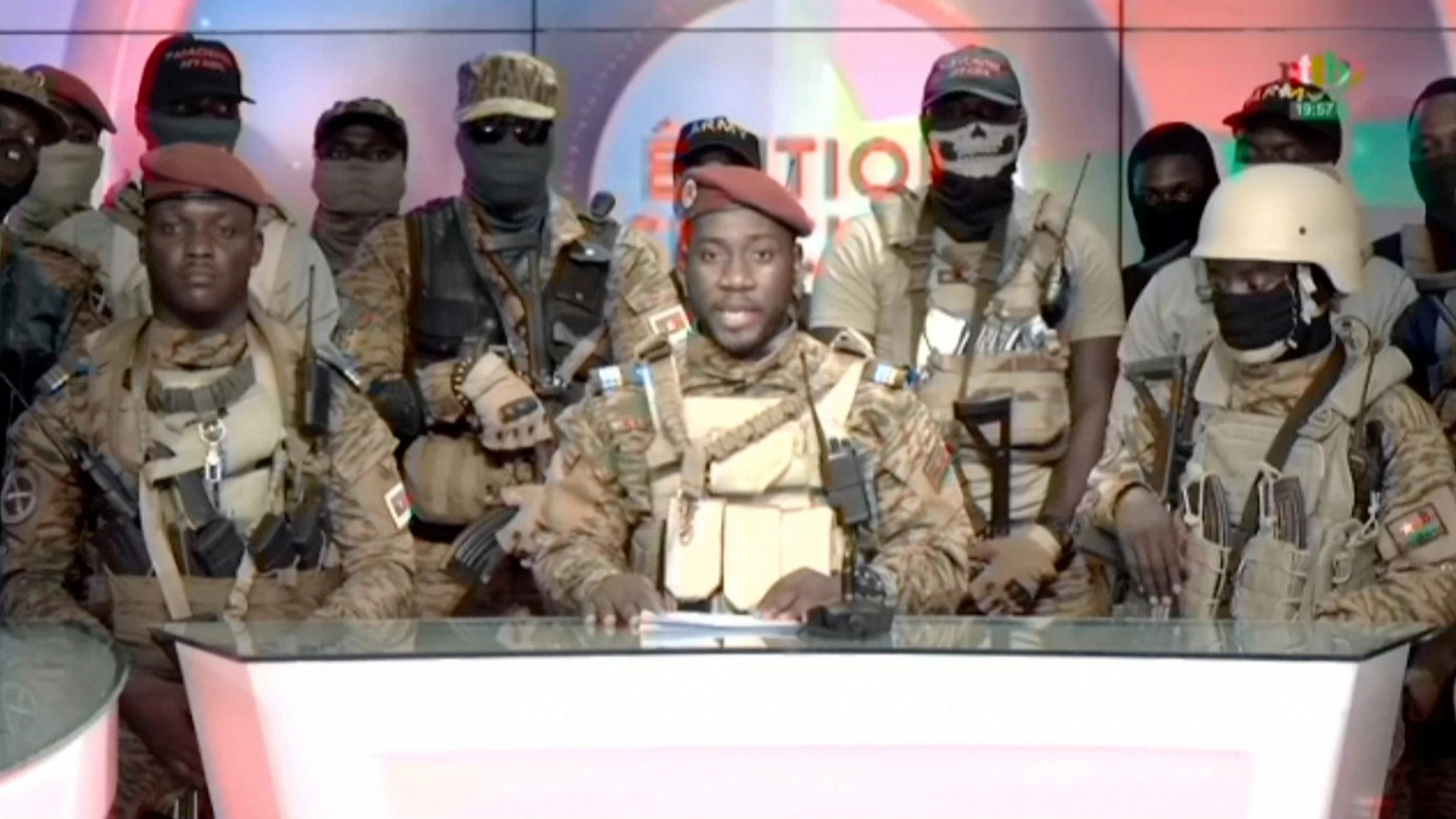
I felt thoroughly defeated. In August 2023, I woke up to the news of another coup in another African country. This time it was in Gabon, marking the end of the Bongo family dynasty which had ruled the country since 1967. And while I was certainly not an admirer of the ousted autocratic regime—even though I had just traveled there a few weeks earlier—I was surprised that others did not share my disappointment about the military takeover. Indeed, some of them even counseled the U.S. government to refrain from taking action.
Africa has experienced more coups than any other region. U.S. researchers Jonathan Powell and Clayton Thyne’s most recent data shows 221 military takeovers, of which 111 have been successful. Over the course of my career as a CIA analyst, think tank expert, and U.S. policymaker, I have had to warn about coup threats, evaluate potential responses, and confront their consequences. Based on my studies and personal experiences—my first coups were Guinea-Bissau in 2003 and Mauritania in 2005—I’ve come to three conclusions about coups:
Generally Popular. While solid majorities of Africans express a preference for democracy over any other kind of government, Afrobarometer polling indicates that 51 percent agree that it is “legitimate for the armed forces to take control of government when elected leaders abuse power for their own ends.” One is hard-pressed to point to coups that were initially opposed by the population, save for Sani Abacha’s coup in Nigeria in 1993, Johnny Paul Koroma’s takeover in Sierra Leone in 1997, and the Sudanese military’s consolidation of power in 2021.
Relatively Easy. I always think about the story of Lieutenant Arthur who in 1967 almost single-handedly overthrew the ruling military junta in Ghana. As Naunihal Singh explains in his extraordinary book, Seizing Power: The Strategic Logic of Military Coups, the central dynamics of a coup attempt are those that occur within a military. Soldiers don't want to engage in fratricidal bloodshed, a sentiment that enables junior officers or even disliked senior officers to swiftly consolidate control.
Remarkably Diverse. There are significant variations in military coups from the rank of the plotters, popularity of the ousted leader, and timing of the power grab. In some cases, a coup fails but it still results in the end of the government. Contrary to former Nigerian President Goodluck Jonathan’s reference to a ‘ceremonial coup’ in Guinea-Bissau, there have been cases where dethroned leaders comment on coups—or even speak out publicly from detention or exile; Niger’s President Bazoum, for example, penned a Washington Post opinion piece from captivity.
What Has Changed
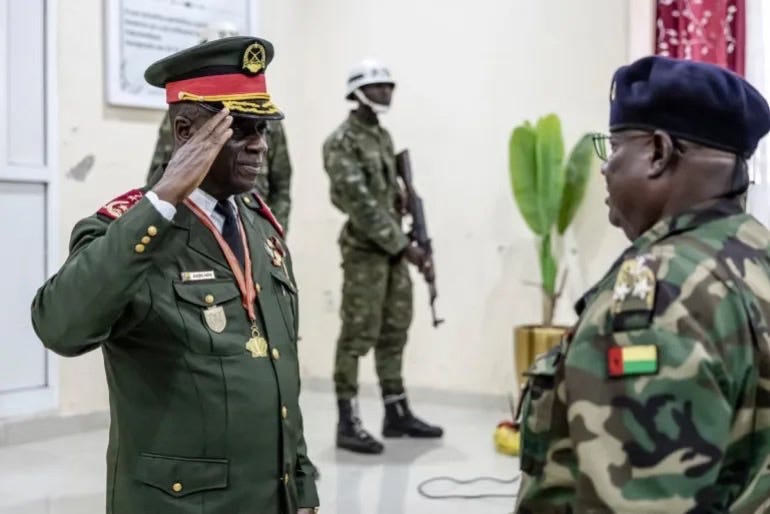
There used to be a consensus about the illegality of coups. As I wrote in Foreign Affairs in 2024, every coup between 2005 and 2009 was denounced by a Western power. Even Russia observed this norm for a spell, calling for the restoration of democratic rule following a 2003 coup in Guinea-Bissau and a 2008 coup in Mauritania. This consensus, however, has broken down. It is partly the result of fatigue with the quality of democracy and partly a reflection of the existential security challenges facing many countries, especially those in the Sahel. It has heralded the return of what Samuel Fury Childs Daly has termed “militarism”—a belief that soldiers can bring order and discipline, as well as restore dignity and sovereignty to the nation. Geopolitical competition is also contributing to this dynamic, creating an atmosphere where coup leaders need not fear external isolation. Indeed, they may even be feted in Moscow or courted in Beijing.
In other words, there is a new legitimacy to military rule. I found myself in arguments with friends and colleagues about the juntas—about their popularity, effectiveness, and the righteousness of the coup leaders’ agendas. Many of my debate partners saw my position on coups as naive and too rigid. They implored the U.S. government to be more sympathetic to what they believed to be genuine efforts to ‘reform’ the state. Paradoxically, some argued that Washington should go easy on the juntas lest Russia or China gain influence, while others insisted that U.S. opposition itself was driven by Moscow’s growing role in the Sahel.
After I left my perch at the White House, I was asked whether the United States had learned any lessons from the Cold War. It’s a fair question, but it is one that should be directed at both the U.S. government and African publics. In my opinion, the enthusiasm about the transformative power of coups is misplaced. The current crop of coup leaders outwardly admire their 20th century predecessors, meeting with former Ghanaian president Jerry Rawlings and honoring former Malian ruler Moussa Traore. But the record of these coups of yesteryear is almost uniformly bad; many of the military leaders stayed in power for decades, bankrupted their countries, and repressed their people. There is no such thing as a good coup; as Nic Cheeseman explains, coups have generated as many problems as they have solved. It is telling that two of the most fondly remembered coup leaders—Nigeria’s Murtala Mohammed and Burkina Faso’s Thomas Sankara—served for only months or a few years before falling to an assassin’s bullet.
How Not To Respond
Maybe some of this is not worth debating at this moment. The pressing question is what to do. Since the end of the Cold War, the United States had a playbook that it followed fairly diligently. U.S. administrations imposed sanctions, resulting in a short transition and return to civilian rule. Much of this was dictated by law; U.S. coup restrictions, known as Section 7008, prohibit funding to “the government of any country whose duly elected head of government is deposed by military coup d’état or decree” and is only restored when the Secretary of State certifies that “a democratically elected government has taken office.” The U.S. response was often mirrored by European partners and African governments, especially in West Africa, which expelled juntas from regional organizations and sometimes imposed very stringent penalties.
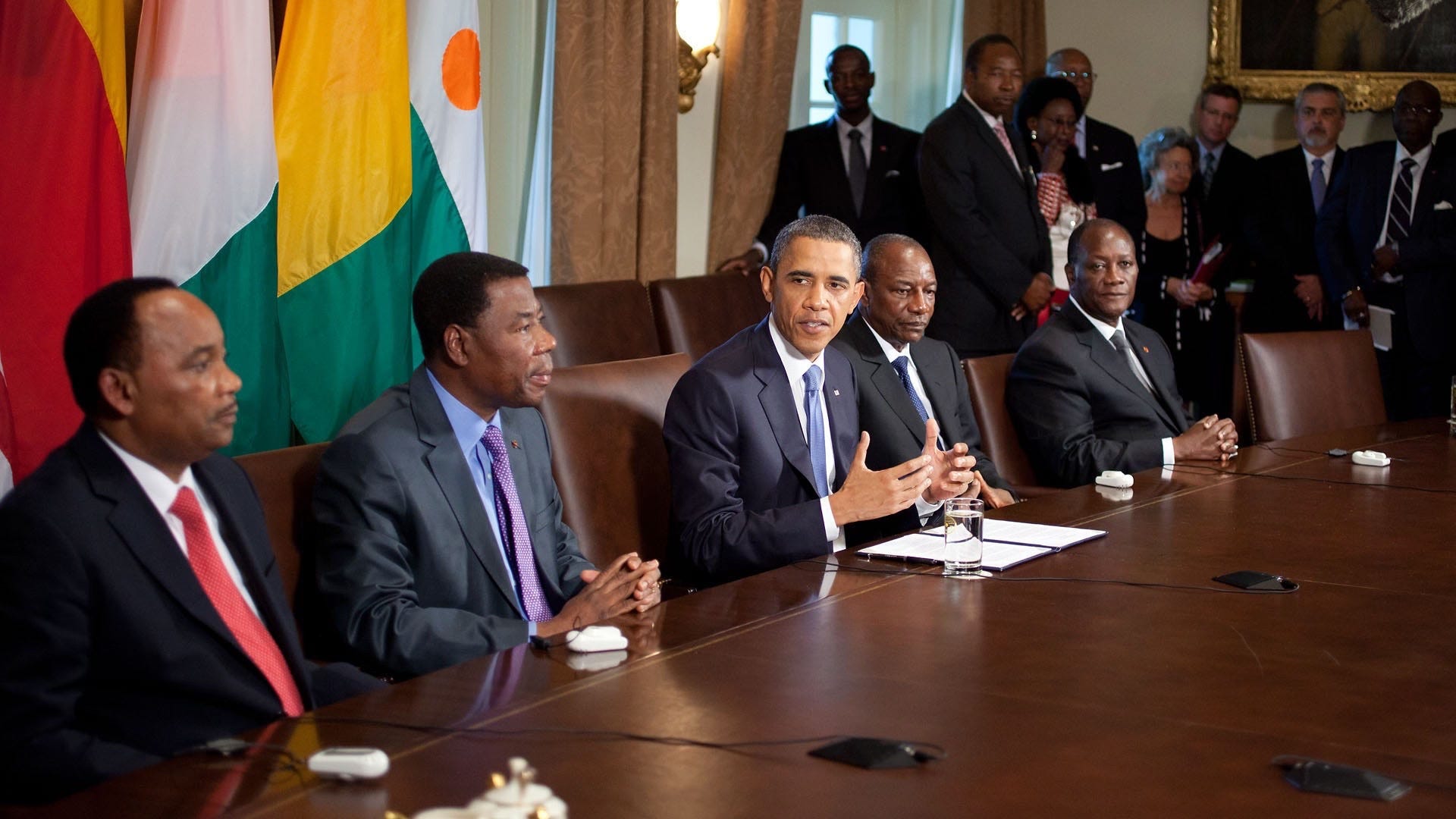
It worked—somewhat. Most governments transitioned within two years, and in most cases, a civilian (as opposed to the coup leader) won in free and fair elections. The reality, however, was that most of these governments didn’t last long. The democratic transitions in Burkina Faso, Guinea, Guinea-Bissau, Mali, and Niger in the 2010s each lasted about a decade. In retrospect, there wasn’t enough investment to ensure democratic consolidation. We declared victory, cheering one transition as a “great leap” on the path to democracy and hailing another a “historic moment.” We pledged to help these countries to strengthen their democratic institutions and pursue reconciliation. The truth, unfortunately, was that we didn’t. We returned to business as usual, and the seeds for another coup eventually took root.
If our approach was imperfect at best in the 2010s, it became obsolete by the time I rejoined government in 2021. New junta leaders initially promised 18-month transition timelines and constitutional revisions to placate the international community, but they quickly abandoned those plans. Burkina Faso, Mali, and Niger have notional transitions scheduled by the end of the decade, but it is hard to take them seriously. These leaders claim that elections cannot take place until they have restored stability and vanquished the extremist groups operating in their territories, essentially enabling them to hold onto power for the foreseeable future.
Sitting in Washington, D.C., it became painfully clear that we couldn’t persist in our old ways. We applied coup restrictions consistent with our laws, but it left us on the sidelines without much leverage. If the juntas weren’t planning to affect expeditious transitions, we had little to offer. The resumption of our assistance was tied to democratic elections, which seemed to be distant prospects. Moreover, these countries did have exigent security concerns that threatened their countries and the broader region, and we were constrained by our own laws—coup and human rights restrictions—to provide significant assistance, even when it was in the U.S. national interest. In the case of Burkina Faso, for example, we had little legal latitude to assist the junta in its fight against violent extremism. Once coup sanctions were imposed, we managed to preserve some programming (under notwithstanding authorities) at the outset, but there was little more we could do in subsequent years.
Making matters worse, our West African partners imposed extraordinarily tough sanctions—cutting these countries off from regional banks, blocking medicine and food imports, and shutting off electricity. The juntas, aided by foreign and domestic disinformation campaigns, heaped blame on external actors to win them popular sympathy. The old playbook, in hindsight, had helped to entrench the soldiers and further opened the door to Russia and other countries who were willingness to work with them.
The Beginning of a New Approach
Despite my disappointment about the uptick in military takeovers, I saw it as an opportunity to rethink our approach. We pressed for more flexibility in our responses to coups, allowing us to structure our programs to reward intermediate steps and increase our investments to strengthen democratic transitions. With congressional support, we also could avail ourselves of new coup waivers.
Reciprocal Steps. In summer 2023, then-Assistant Secretary of State for African Affairs Molly Phee outlined a reciprocal approach to coup restrictions. Instead of withholding all our assistances until a democratic election, we agreed to gradually resume some programming. As she explained to The Africa Report, “as the coup-led governments move toward a democratic transition, and take positive steps, we’ll be in a position to resume or initiate positive engagement.” This introduced a more tailored response, facilitating a dialogue with the junta to construct a mutually agreed-upon program. Our experience was that some coup leaders, such as Gabon’s Brice Oligui Nguema, welcomed this approach while others, specifically in Niger, rejected it.
Political Transitions. At the U.S.-Africa Leaders Summit, President Biden announced a $75 million program known as the African Democratic and Political Transitions (ADAPT) initiative. I wanted more flexible funding to support durable political transitions and hopefully end the cycle of recurring coups. I also planned to use ADAPT to signal U.S. confidence in progress toward the resumption of civilian rule. We awarded ADAPT resources to help Guinea draft a new constitution and strengthen Gabon’s election administration and voter education. (Note: these are the only two coup-affected countries so far that have held elections.)
7008 Waiver. In addition, my colleagues decided to invoke a 7008 waiver to enable the State Department to provide maritime security assistance to Gabon. This was possible because Congress made a change to Section 7008 in December 2022, authorizing the Secretary of State to waive funding restrictions on a program-by-program basis if he certifies the waiver is in the national security interest of the United States.
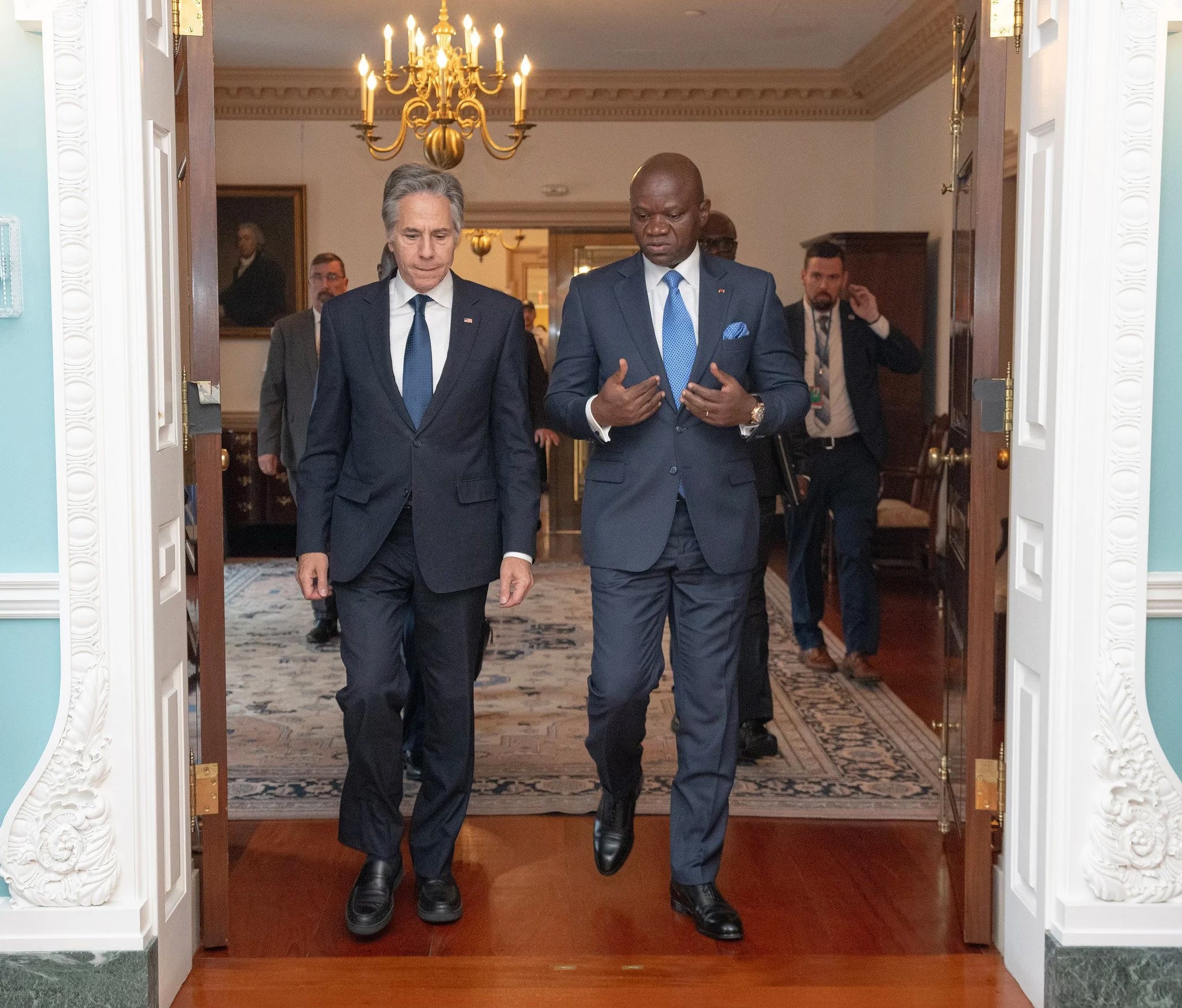
To be clear, I don’t think these policy changes are sufficient to address the resurgence of coups in the region, but they are important steps in the right direction. It is evident that we need to reimagine our approach to military takeovers. It goes without saying that the onus is not only on the United States. Our West African partners should take a closer look at their actions as well. Instead of inflicting maximum penalties that comes with a high risk of backfiring, it is probably smarter to impose targeted sanctions on individuals and certain entities to affect change.
The Golden Hour
One final observation. My friend Todd Moss wrote a fictional novel about a U.S. diplomat trying to reverse a coup in Mali. He called it The Golden Hour, borrowing an idea from the medical world where rapid diagnosis and treatment offer the best chance of preventing death or severe disability after a severe or sudden illness. I think he was onto something; there is a small window to restore civilian rule or prevent a coup from succeeding. It recently happened in Benin, and there are other historical examples as well. (Another early experience for me as an analyst was São Tomé in 2003, where a coup was reversed after then-Nigerian President Olusegun Obasanjo intervened.) This underscores the importance of an immediate response: don’t wait for the dust to settle or agonize over inadvertently bestowing legitimacy. Get on a plane. Meet the key players. Negotiate a quick resolution. If you dither, it is probably too late
Post-Strategy
I am convinced that we should continue to oppose military takeovers, but we need to understand why they continue to have salience and accept that our responses have become outdated and dogmatic. We need to have the flexibility to tailor our response depending on the country and the context. Like everything in foreign policy, it will require nuance and a repertoire of different tools to realize a positive outcome.
To be clear, we shouldn’t turn a blind eye to coups because of geopolitical considerations or because some have deprioritized democracy. (It is worth noting that the Trump Administration has not commented on or imposed coup restrictions on Madagascar or Guinea-Bissau.) When soldiers take over, it doesn’t solve the underlying governance or security problems, and it almost always introduces greater instability and uncertainty. Even the U.S. diplomats in the 1960s appreciated this reality. After seemingly welcoming the coups in his memo to Secretary Rusk, the senior bureau official made the following observation:
We should not, however, be misled into thinking that this new atmosphere will necessarily produce long-term improvement. The new leadership in itself cannot solve the problems facing these new nations. They will remain. Budgets cannot be balanced overnight; economic development is not the automatic consequence of good intentions; external subversion will not cease because communist missions leave a few countries.
Six decades later, it is crucial to relearn old lessons and teach ourselves new tricks. We have to rewrite the playbook, including how we talk about U.S. policy regarding military takeovers. Let’s not forget that coups may feel corrective or even normalized in the moment, but they rarely deliver what they promise.
As a Malian residing in the US, I totally agree that the immediate sanctions and cutting off only makes Russian cooperation not only easier for these nations, but even more so ideal, beyond the governments, in the eyes of the people. In Mali, their perception of ECOWAS economic intervention and France and the US alike has only declined. Now that they’re removed from ECOWAS and are in their own alliance with Burkina Faso and Niger, they look towards non traditional methods, innovative ones that are not US-aligned and especially not France-aligned because they are all equally seeking longterm change. Though the method of a military coup, is something the people probably won’t ever see as a problem, rather the ways in which the world responds to them when the people believe, wholly, in their success.
Interesting post. What do you think about regional intervention (economic or military) in response to coups à la ECOWAS post Niger? There was a pretty robust debate at the time about what was in our interests - wonder how you think about that especially if there is a “Golden Hour” in which coups are potentially reversible?