
On Implementation
The hard part isn't the idea. It's everything after.

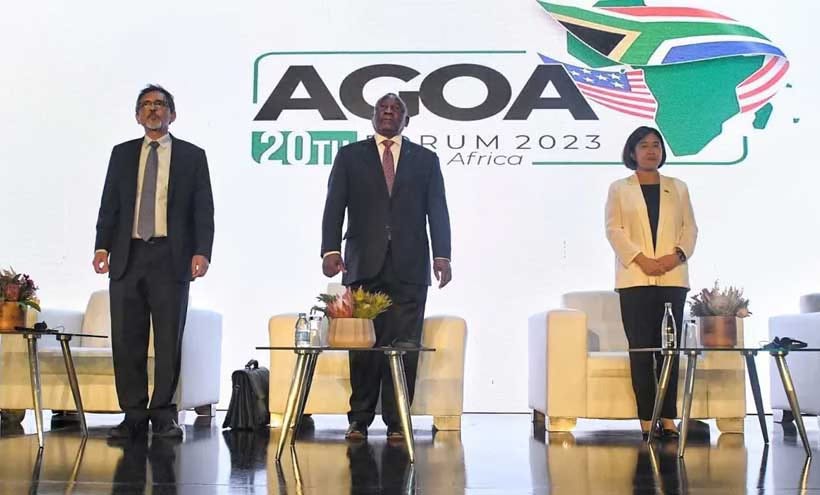
Last month I joined a panel on policy implementation at a conference in South Africa. I felt like an imposter. Throughout my career, I have implemented policies, executed initiatives, and staged major events. But implementation has never come naturally to me. I’ve always been more keen to kick around “big ideas” than carry them out. What has worked for me is to leverage my strengths, lean on others to lead, and learn from history. And that’s when I was at my best. In other words, it is a perfect topic for Post Strategy.
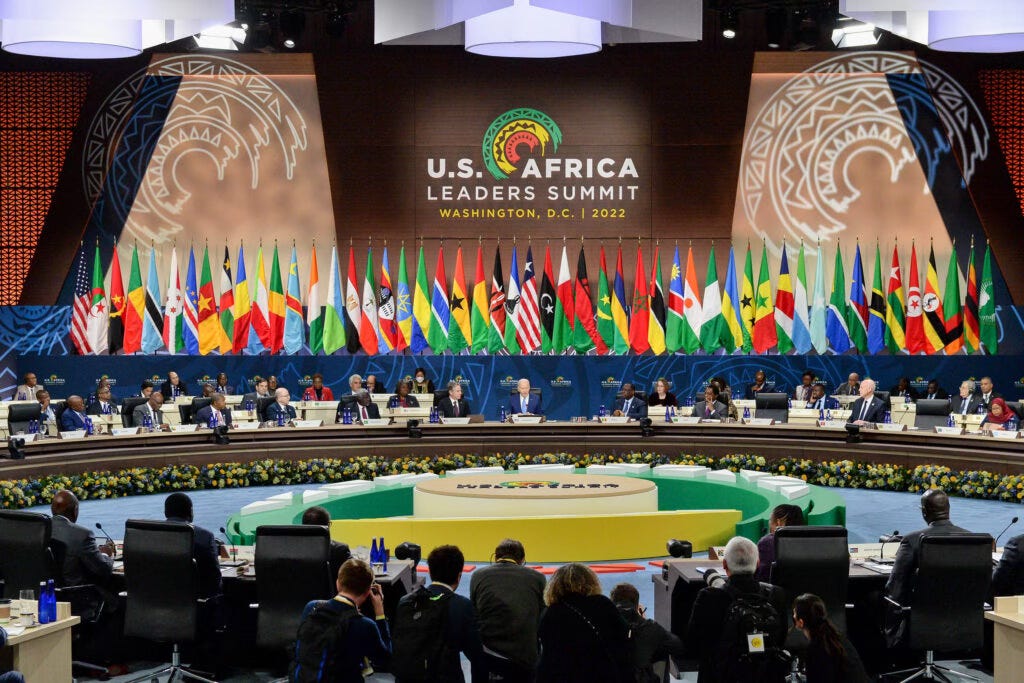
During the conference, I tried to distill my reflections into five points. These are not exhaustive and not specific to U.S. Africa policy. Admittedly, I received some pointed criticism during the Q&A. (I accept that I focused too much on the U.S. side of the equation and gave short shrift to the crucial collaboration with African partners, an omission I will try to rectify here.) These points may seem obvious, but they bear repeating. It is remarkably easy to get them wrong, and I take a lot of responsibility for not heeding my own advice in instances where we dropped the ball.
Ideas are the Easy Part
There is usually no shortage of what we should do differently when it comes to U.S. policy toward Africa. Some ideas are blindingly simple while others are infuriatingly complex. Some concepts are quite modest while others are revolutionary. When we were considering deliverables for the U.S.-Africa Leaders Summit in late 2022, we were inundated with proposals. I found that the shape of an idea often depended on who was tabling it. In fact, it was almost laughably predictable which ideas came from which parts of the policy community.
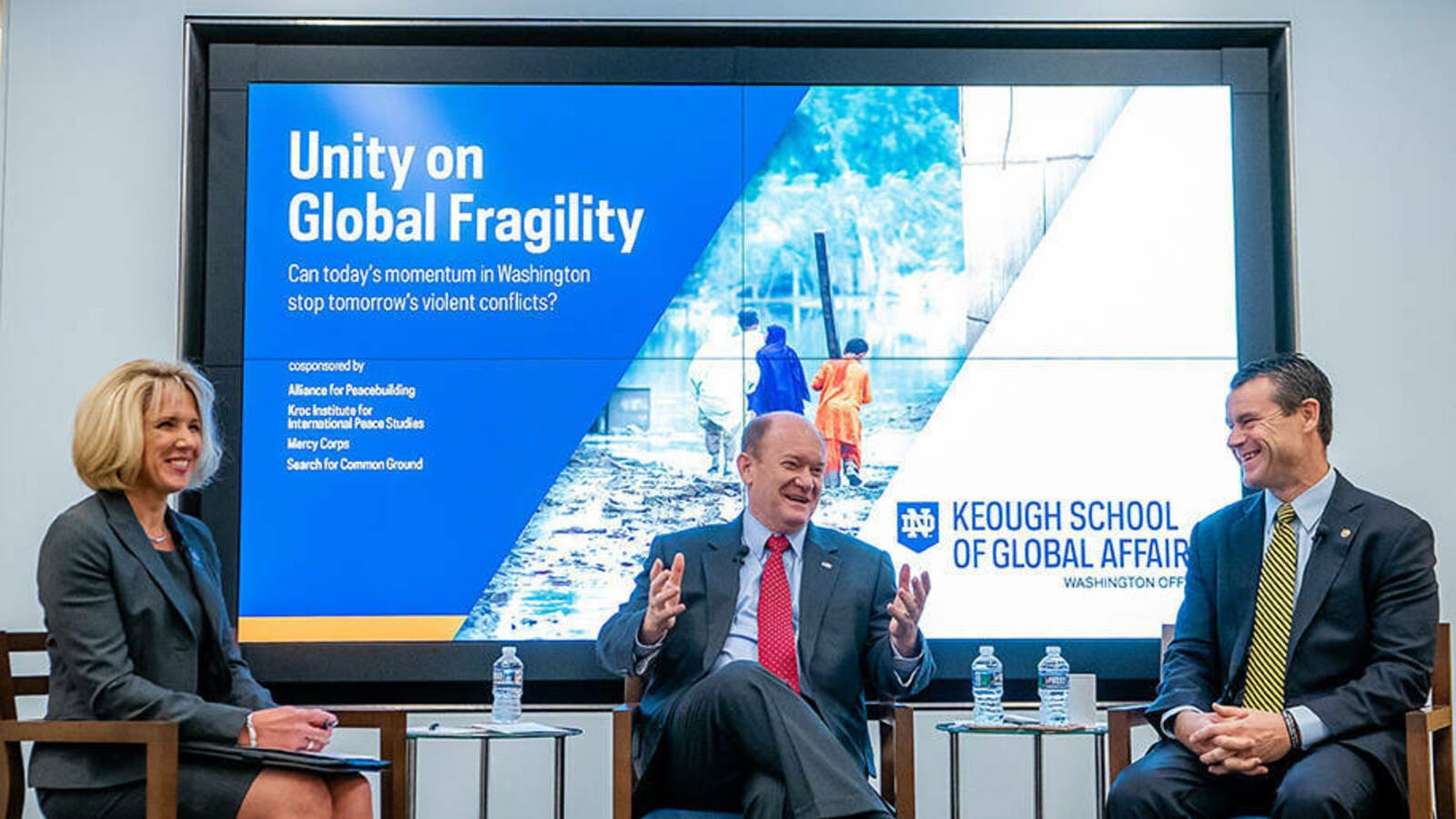
The bureaucrats usually voted for practical and incremental. For example, expanding a program to a few additional countries or increasing the funding for a specific initiative. Despite the ambition of the Global Fragility Act (GFA), the initial U.S. Strategy to Prevent Conflict and Promote Stability (SPCPS) country and regional plans proffered very little that was new or different.
The political appointees favored the bold and transformative. In a previous post on initiatives, I talked about my idea to rethink security assistance through positive conditionality. We called it the 21st Century Partnership for African Security (21PAS) based in part on ideas that scholars had promoted for years. It never gained traction.
The academics routinely gravitated toward the radical and unprecedented. In December 2022, my friend Cobus Van Staden argued that the Biden Administration should have tackled U.S. fiduciary laws to address private sector lending and make it “easier to deal with debt restructuring processes.” (He also acknowledged that probably wasn’t possible.)
Ultimately, though, what distinguishes a successful idea from an unsuccessful one is whether you can implement it. The graveyard is full of good ideas.
Ownership is Everything
One of the keys to successful implementation is buy-in. You need the most important stakeholders to be equally committed to the idea. That starts at the top; President Biden, for example, would ask who he should hold accountable if the initiative fails. But it is more than just the boss. It is essential that your interagency colleagues and other critical voices are behind the effort. If they don’t agree with the program, they are going to half-heartedly implement it or they will try to tank it from the outside. Even a well-negotiated agreement can unravel if key constituencies never buy into it. UK and U.S. media attacks on the proposed transfer of the Chagos Islands to Mauritius went a long way in scuttling the deal this year.
Most importantly, it has to have support from African partners. When we negotiated several ceasefires in eastern Democratic Republic of the Congo (DRC), for example, we did more than secure commitments and compromises. We worked with the relevant parties to draft statements and monitor progress on the ground. I believe that’s the secret to successful mediation.
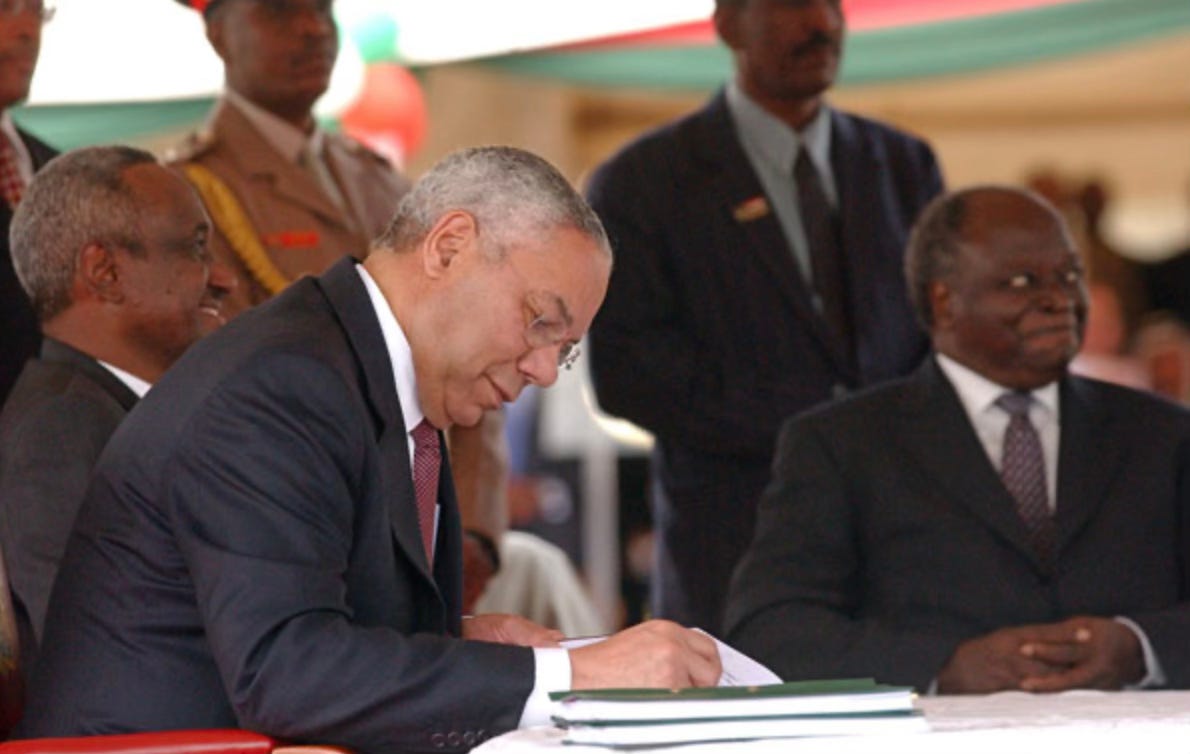
The international community, notably the quartet of the United States, UK, Norway and Italy, worked closely with African negotiators, including General Lazaro Sumbeiywo who served as Kenya’s Special Envoy to the IGAD-led Sudanese peace process. At the signing of the Comprehensive Peace Agreement in 2005, Secretary Colin Powell said “all of us owe General Sumbeiywo a great debt of gratitude for his extraordinary efforts.” Kenya continued to affirm its commitment to the agreement in subsequent years.
The same dynamic played out in West Africa. President George W. Bush worked closely with West African leaders, especially Nigerian President Olusegun Obasanjo, to end the civil war in Liberia. During his 2003 trip to the region, he thanked Obasanjo for his commitment to regional peace, reiterating that the United States will “work with Nigeria and ECOWAS on issues such as Liberia.” This shared ownership resulted in U.S. support for UN peacekeepers and Nigeria offering temporary asylum to former Liberian leader Charles Taylor. Neither side could have delivered the outcome on its own.
Rigorously Plan, Ruthlessly Track
Successful implementation requires relentless attention. It takes thoughtfulness and care to implement policy initiatives and peace deals. While it may be exciting to announce a major new effort, it is worth very little if you aren’t prepared to execute on it.
I’ve had my share of successes and failures. When I was an NSC director during the Obama Administration, I led a process that tracked every step of the Somali political transition in 2012. Along with interagency colleagues, we anticipated potential delays and worked through a complicated process that culminated in the election of Somali President Hassan Sheikh Mahamud and U.S. recognition of Somalia for the first time since 1993. (As an aside, the interagency resisted conducting similar exercises for other transitions—whether in the Sahel or in Somalia in 2021-22). I am less proud of my inability to usher in a new partnership on food security during the Biden Administration. Despite significant buy-in from African stakeholders, we struggled to fully develop the framework before the announcement and stay on top of multiple requirements afterwards. Even with strong buy-in, we couldn’t compensate for rushed planning and challenging follow-through tasks.
When there is thoroughness to implementation, it can lead to extraordinary outcomes.
Some of the most long-lasting U.S. initiatives toward Africa started with careful design and repeated stress-testing. In 2024, former deputy National Security Advisor Gary Edson explained that the Millennium Challenge Corporation (MCC) concept was based on a body of research which showed that aid was more effective in good policy environments. It was followed by significant consultations, repeated refinement of the concept, and meetings with OMB to secure independent funding to ensure it could deliver on its promise.
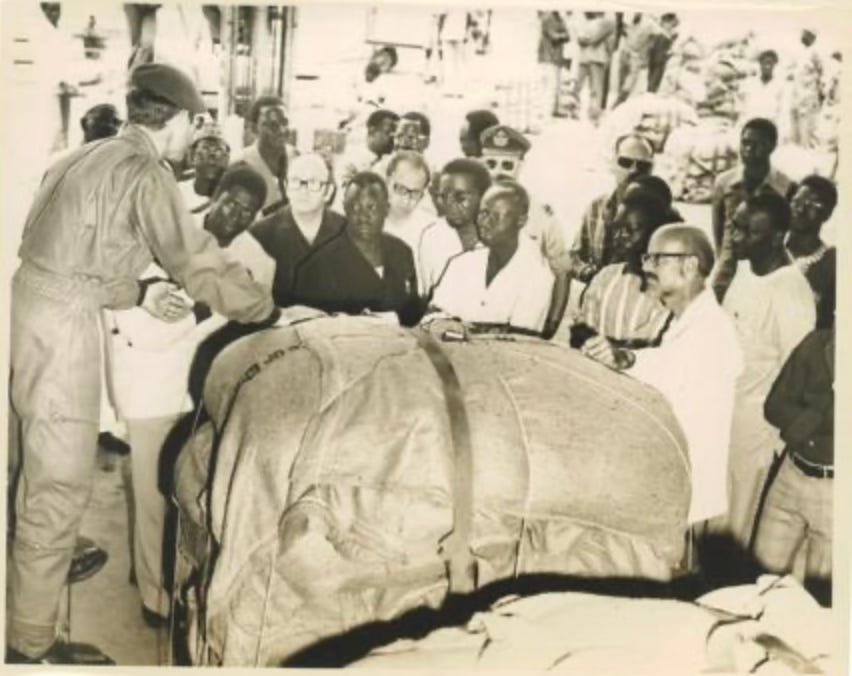
This kind of rigor has defined the best U.S. responses to humanitarian and health crises. During the 1973 Sahel famine, U.S. Ambassador to Upper Volta Don Easum recalled organizing “truck transport to bring hundreds of tons of surplus U.S. sorghum to Ouagadougou from the Ghanaian port of Tema—a rough-road distance of 550 miles.” The Obama Administration’s response to the Ebola outbreak in West Africa was similarly grounded in detailed planning and consistent monitoring—a standard worth remembering as the current outbreak remains uncontained.
Overshare and Overdeliver
Too often, we go silent after a big announcement or fail to explain next steps, including some challenges that we might face in the process. Even if implementation is proceeding apace, it can sow the seeds of doubt and shake the confidence of observers and partners. I am grateful to Ambassador Johnnie Carson who understood this dynamic and pushed us to do more to talk about what we had accomplished since the U.S.-Africa Leaders Summit. We belatedly began doing interviews, appearing on podcasts, and issuing updates on implementation. The reluctance to communicate, in contrast, is part of the reason why the first Trump Administration’s Prosper Africa struggled to launch. (To be sure, Prosper Africa also suffered from being an underdeveloped concept when National Security Advisor John Bolton unveiled the initiative in December 2018.)
One lesson is to set expectations early, especially when the work will be lengthy and difficult. That doesn’t mean scale back your ambition but rather be clear about how your efforts may face significant hurdles and require months, if not years, of focused work.
During the Carter Administration, there was a clear-eyed approach to ending minority rule in Rhodesia. Nancy Mitchell, author of Jimmy Carter in Africa: Race and Power, noted that “Carter doggedly sought a negotiated peace in Rhodesia. He set a goal—peace, justice, and independence—and he pursued it with a determination that rivaled the vigor with which he had sought the presidency.” U.S. Ambassador to Zambia Stephen Low agreed, telling an interviewer that “You have to have a framework set up and a basis for agreement worked out so that you are ready…I had no idea at the time that that is exactly what was going to happen before the year was out. Yes, it was discouraging at the moment we left, but I had no doubt that we had been moving in the right direction, or that we should continue.”
It is counterproductive to declare success before there is true progress. Assistant Secretary of State for African Affairs Hank Cohen, in his memoirs Intervening in Africa: Superpower Peacemaking in a Troubled Continent, questioned whether the George H.W. Bush Administration was unhelpfully driven by “signature obsession” in trying to negotiate the end of the Angolan Civil War in the early 1990s. The same affliction has plagued the Washington Accords in eastern Democratic Republic of Congo, where most participants have acknowledged that the signing event in December 2025 was premature.
Get Ready for What’s Next
In my experience, what is usually neglected in the implementation process is planning for what’s next. Most conflicts don’t stay resolved forever and most initiatives become stale over time. When I was an analyst, I found myself surging to work on crises in Mozambique and Burundi 21 years after the Rome Accords and 10 years after the Arusha Accords, respectively. The international community had declared mission accomplished and moved on to the next problem. There wasn’t enough consistent monitoring and diplomatic engagement to preempt backsliding.
That same dynamic has plagued the African Growth and Opportunity Act (AGOA). The landmark trade legislation, passed in 2000, was renewed in 2015 with few substantive changes. Despite a thoughtful U.S. Trade Representative report entitled Beyond AGOA in 2016, there have been surprisingly few serious efforts to rethink or modernize the program. When I served in the Biden Administration, there was little appetite to do much beyond shifting to biannual eligibility reviews. It is a reminder that successful initiatives can become stagnant if policymakers fail to plan for what comes next. AGOA’s lack of dynamism in part explains why the program briefly expired and remains on uncertain footing today. As U.S. Trade Representative Jamieson Greer recently observed: “I know a lot of people want it to be long. For me, the better the program is, the more likely it is to be longer. The less ambitious it is, the less reason there is to make it endure for longer.”
One Final Thought: Who’s on Your Team?
There’s one point I neglected to share at the conference—and it may be the most important. Policy implementation demands attention to detail, relentless monitoring, and strong execution. But it also requires self-awareness. How do you work? What are you good at? Where do you struggle? When I was senior director for African affairs, I sent new directors an email entitled “How I Operate,” detailing what I saw as my strengths and weaknesses. I intentionally recruited people who complemented my shortcomings. When I realized I was drowning in implementation work, I recruited Aditi Vira to coordinate the process and work closely with the Department of State.
That lesson appears throughout the history of U.S.-Africa policy. Kennedy’s Assistant Secretary of State for African Affairs, G. Mennen “Soapy” Williams, for example, relied on Wayne Fredericks who had considerable Africa expertise from his time at the Ford Foundation. The best implementers understand what they need and build teams accordingly.
Post Strategy
Do I even need to say I am convinced that implementation is important? It is almost too obvious. My bigger takeaway is what it takes to do it well. You have to get the details right, but it is just as essential to communicate what you are trying to accomplish and recruit a team that truly believes in the effort and brings skills that complement your own. Implementation, after all, is a process, not a destination. It only succeeds if it continues after you are gone.
Judd: Very useful essay for me. As you know, I teach Global Policymaking in the Fall semester (thanks again for serving as guest speaker) and Global Policy Implementation (Diplomacy) in the Spring semester. Your essay captures the essence of the diplomacy course. Your essays are highly valued by our grad students and me. Thank you.
This is a really good post! But by the time I finished, I questioned point one - that the ideas are the easy part. Maybe it’s because I’m deep into a new idea for my newest project and can only hope one to grapple with institutional implementation! But I wonder if some of the other parts you diagnose, from the co-creation to the ownership to the stress testing, are actually a function of trying to get into “the doing” too quickly and not spending enough time really with the ideas…