
On Lecturing
We lecture too much. But the critique is also wrong.

It has become a familiar refrain: previous administrations spent too much of their time lecturing Africans. It shows up in speeches, interviews, and congressional hearings. It has become the easy answer to almost any question, often used as a foil before introducing new policies or approaches. I have to admit, I find it slightly infuriating. But that’s not a very constructive reaction.
Through this newsletter, I’ve tried to grapple honestly with U.S. policy toward Africa. I am neither interested in reflexively criticizing the Trump Administration’s approach nor uncritically celebrating the Biden Administration’s record. If the goal is to understand what has worked, what has failed, and what we should do differently, then we have to ask a hard question: were we lecturing and if we were, was that a problem?
Let’s start with some terminology: what do we mean when we say “lecturing”? It strikes me as subtly different than expressing policy differences or even being critical. There’s a power dynamic implied, with an individual (or government) reprimanding or scolding an unequal counterpart. Merriam-Webster’s definition is interesting: to lecture is to “reprove formally.” I think “formally” is doing the most important work here. It suggests an official rebuke. That’s perhaps why it has such power in current critiques of past administrations. Even though lecturing is not limited to values and norms, it is biting because it suggests a moral high ground, or at least a belief in one’s relative superiority. It is certainly not conducive to a foreign policy rooted in mutual respect.
What the Lecturing Critique Gets Right
It is impossible to deny that lecturing has been a regrettable part of the history of U.S. relations with the African continent. In his memoirs, former Secretary of State Henry Kissinger opined that “many officers in the Africa bureau evolved a kind of siege mentality in which they transmuted their isolation into a claim to moral superiority, casting themselves as the defenders of American idealism.” When one reviews past speeches by U.S. presidents and senior officials on Africa, it does feel preachy and a bit cringe. Here are some examples:
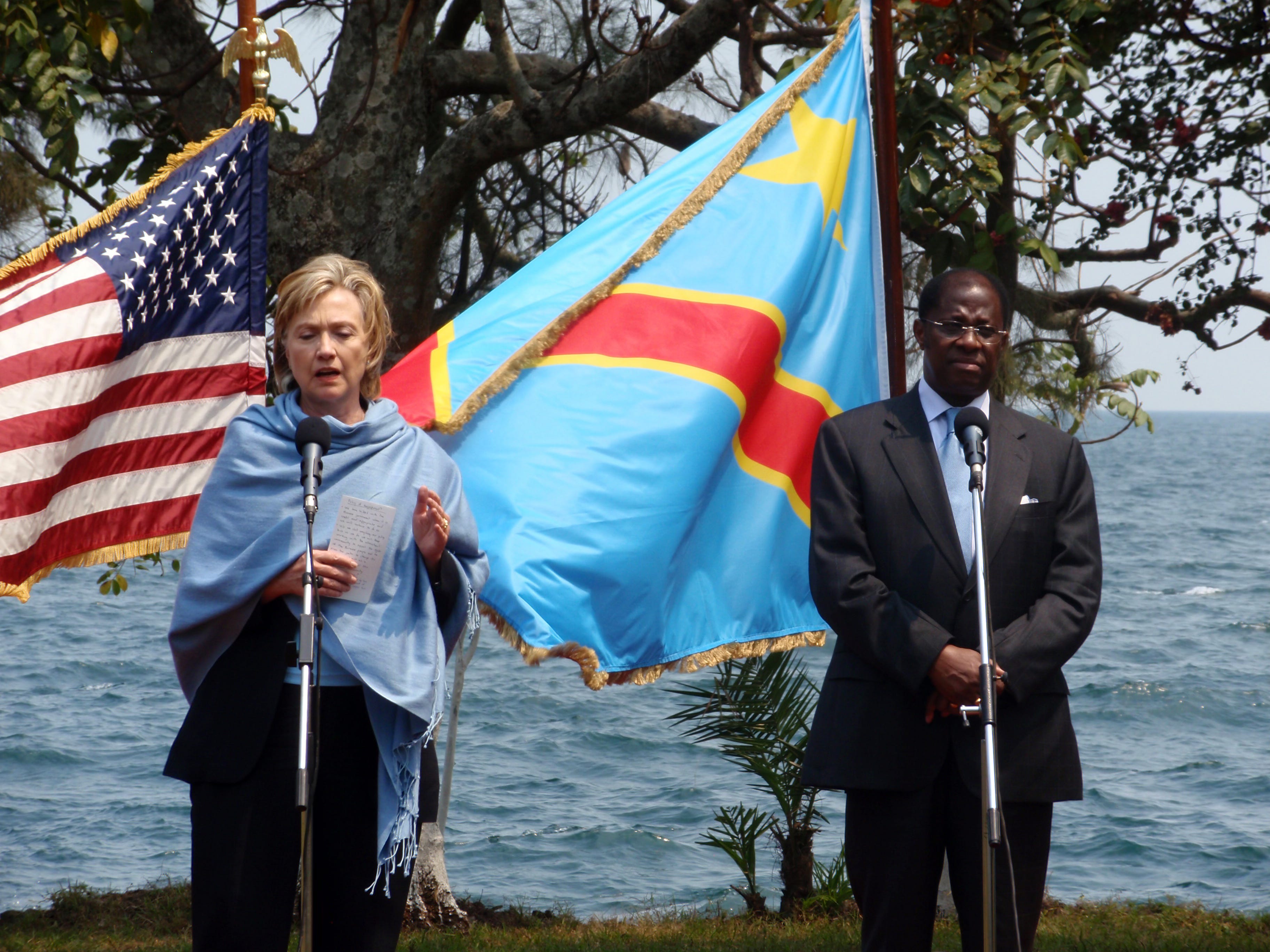
During Secretary of State Hillary Clinton’s 2009 trip to the region, she pointedly said “look at Nigeria, another great country. Nigeria imports petroleum products even though it’s the fifth-largest producer of petroleum in the world. That is bad governance. That is a failure of rules that are enforced for the benefit of the people. And we have got to speak out about this.”
Following his Vice President Dan Quayle’s engagement with Malawian President Hastings Banda in 1991, he told the press that “we will continue to urge, in the strongest terms, respect for democracy and the rule of law. No one doubts where the United States stands.”
In President Jimmy Carter’s meeting with Tanzanian leader Julius Nyerere in 1977, national security advisor Zbigniew Brzezinski asked—twice—”Mr. President, are you aware that the number of Cubans in Angola compared to the total population of Angola is larger than the number of Americans who were in Vietnam at the height of our involvement?” It was so abrasive that Carter quickly ended the meeting.
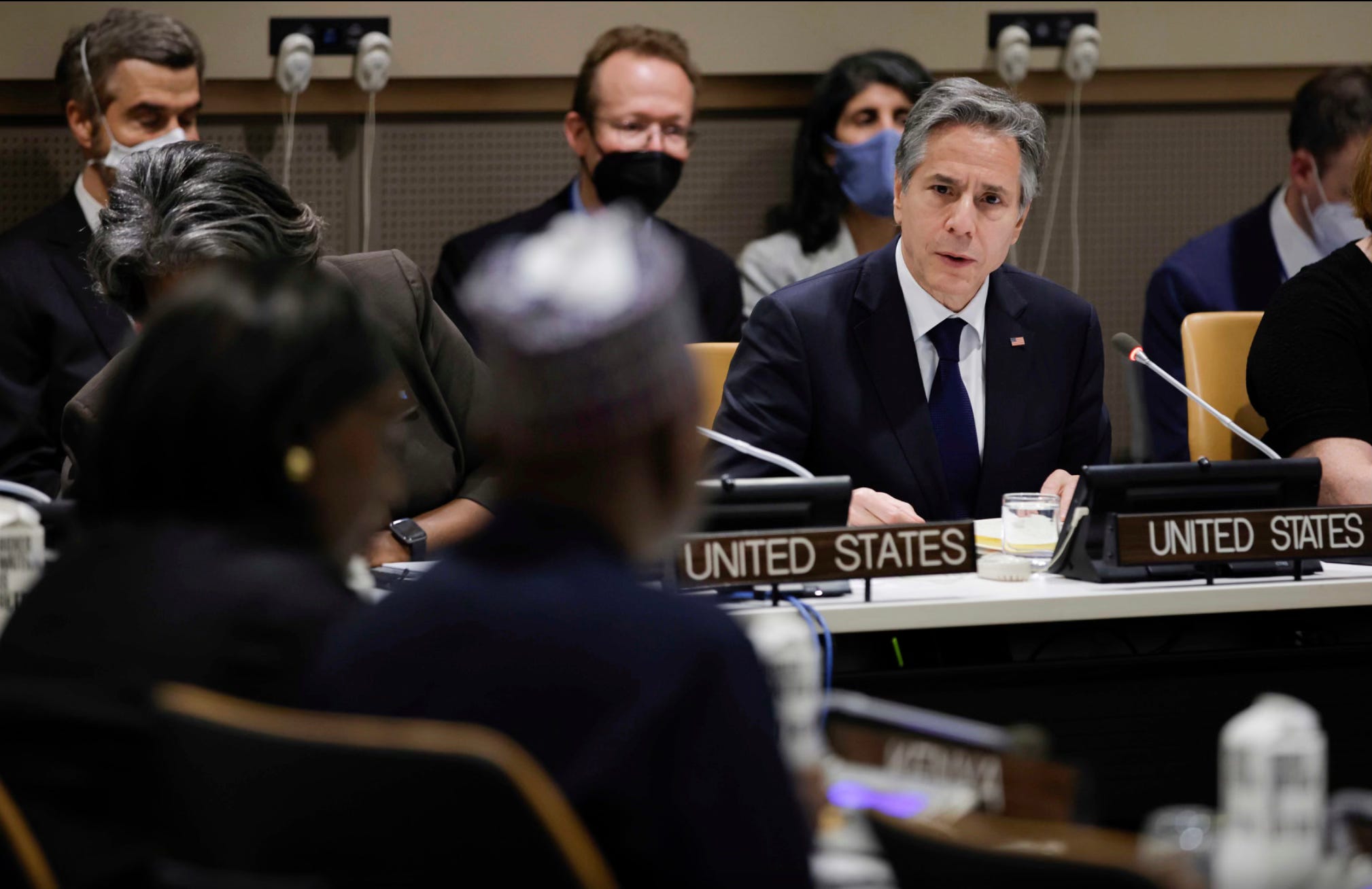
In my experience, however, there is rarely an intent to lecture. Indeed, U.S. leaders have gone out of their way to say as much. As Vice President, Joe Biden prefaced a speech in Nairobi in 2010 with "I hope what I am saying doesn't come across as lecturing." During his presidency, we often stressed that our objective was to listen, not to lecture. It was earnest but, in retrospect, still tone-deaf. Unfortunately, good intentions do not necessarily change how these exchanges are perceived, especially given the power imbalance in the relationship.
What the Lecturing Critique Gets Wrong
The problem with the lecturing critique is what it omits. Most of what has been demagogued as lecturing was just policy—either required by our laws or necessitated by national security.
Illegal Power Grabs. Criticisms that U.S. officials were merely lecturing about democratic values miss that U.S. law requires tough responses. For example, U.S. legislation necessitates the imposition of sanctions following coups d’état—only to be reinstated following democratic elections. Whether we wanted to or not, the Biden Administration restricted assistance to several Sahelian governments, as well as Gabon, for overthrowing civilian governments in accordance with Section 7008 of the Department of State, Foreign Operations, and Related Programs Appropriations Act.
Geopolitical Rivalries. Accusations that U.S. diplomats failed to see Africa “as it is” papers over cases where African leaders worked hand-in-hand with our adversaries to undermine U.S. national security. In 2023, the U.S. Treasury sanctioned (now-deceased) Malian General Sadio Camara for facilitating the deployment and expansion of the Russian-linked Wagner Group activities in Mali—throwing out the UN and European security partners in the process. Similarly, in the following year, U.S. diplomats registered serious concern with the Nigerien junta’s budding ties to Russia and Iran.
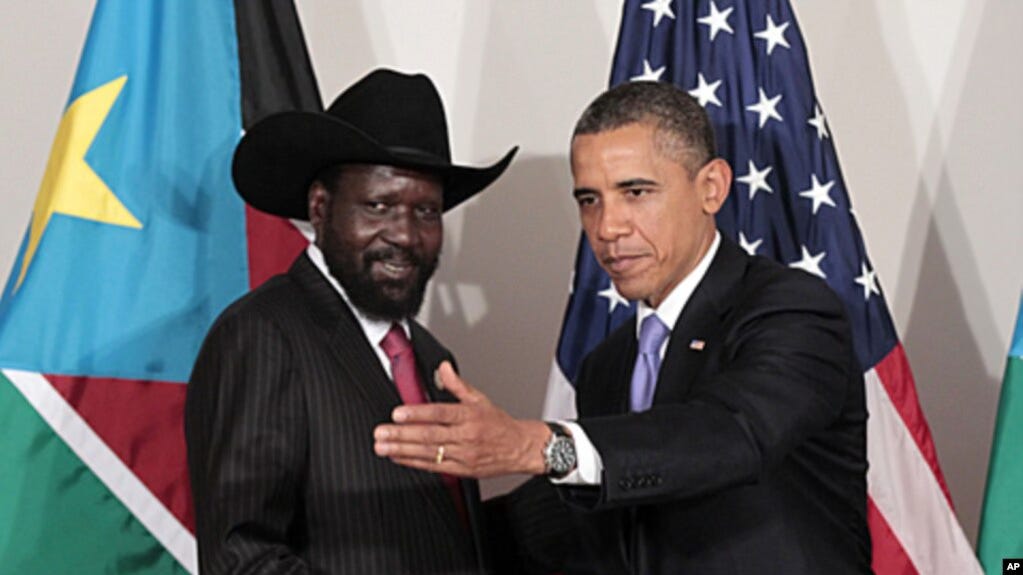
Human Rights Abuses. Complaints that previous administrations were disproportionately focused on human rights ignore the damage that many of the worst offenses have on U.S. interests, as well as their impact on regional instability. President Obama, for example, in 2011 confronted South Sudanese Salva Kiir over cross-border weapons shipments to rebel groups in Sudan. Several countries have lost trade privileges under the African Growth and Opportunity Act for activities that threatened peace, security, and stability or enabled the persecution of minority groups.
And, of course, the current administration is no stranger to lecturing either. U.S. officials, for example, have admonished South African President Cyril Ramaphosa over false claims of “white genocide” and accused the Zambian government of abdicating its responsibilities. Republican members of Congress, no less than Democratic ones, routinely issue statements on human rights and threaten to withhold assistance over flawed elections. In other words, lecturing is not a flaw of one administration or one political party. It is unfortunately embedded in how the United States often conducts foreign policy.
The Politics of Lecturing
I am not dismissing the lecturing charge, but it does seem to often function as a rhetorical tactic to discredit one’s opponents or policies. A senior White House official recently told journalists that the U.S. government is rebuilding relationships because the previous administration spent four years telling Africans that they needed to have transgender parades and Gay Pride flags hanging from their government buildings. That characterization is wholly inaccurate, but it is an effective way to avoid a more serious discussion about the merits of different counterterrorism approaches. The same framing frequently appears in debates about U.S. and Chinese engagement in Africa, exemplified by a 2024 Heritage Foundation report entitled “China Woos Africa While America Lectures.”
African governments are not above using the playbook. Zimbabwean officials in the 2000s bristled at what they alleged was “rank hypocrisy” while Nigerians in the 1970s condemned what they saw as “an insult to Black Dignity.” (Never mind that the historical record is replete with examples of African leaders lecturing U.S. officials.) The net effect is shifting the contours of the debate from policy to polemics. As my friend Ebenezer Obadare, a senior fellow at the Council on Foreign Relations, recently argued: “it is never paternalistic to insist that countries treat their citizens well.”
Post Strategy
I am convinced that there is too much lecturing in U.S. policy toward Africa. But we are really talking about the tone of the message, not necessarily the message itself. It is natural that we will disagree over policies, whether they concern democratic values, geopolitical alignments, or specific government decisions. The relevant question is how do we communicate these concerns. When it is in public, sweeping in its criticism and lacking a concrete ask, it almost certainly will backfire. We should avoid remarks that appear haughty or self-satisfied, but we shouldn’t shrink from standing up for what we believe is right or in the interests of the United States. I agree with Assistant Secretary of State Johnnie Carson who wisely said in 2009:
I hope the United State is not lecturing anyone, but in effect, having diplomatic discussions and dialogues, respectful and those that are mutually beneficial and important for the United States and the countries that we deal with. I think it’s important to respect African governments and leaders, to work with them to resolve problems and challenges that they have, and to engage and be able to engage on these issues. We have and should encourage countries, wherever they are, to do the same thing.
I wanted to write this post because I broadly agree with the lecturing critique. At the same time, I find it too facile and unfair. It flattens hard choices and discounts good outcomes that come from difficult conversations. We don't need to lecture, but we do need to speak clearly—with respect, humility, and candor. The charge of lecturing is unlikely to go away. The real test is making sure it doesn't stop us from saying what needs to be said.