
On Podcasts
Being on a podcast isn't enough. You have to be yourself.

Let’s admit it: most foreign policy podcasts are boring. With a few notable exceptions, they seem designed in a lab to appeal to insiders. They try to be erudite when being accessible is more important; they seek to be comprehensive when concision is more effective; and they aspire to influence when introspection is more powerful. In my opinion, that’s a major mistake. Most listeners want more than the policy, they want to know the person behind the policy. The pressure to perform expertise robs both host and guests of their authenticity. Even worse, it saps podcasts of their vitality and limits their appeal.
I have some experience here. When I was Director of the Africa Program at the Center for Strategic and International Studies (CSIS), I launched two podcasts, Into Africa and 49, and have appeared as a guest on some 21 other shows. I’ve fallen into the same trap, especially when I joined podcasts as a government official. I shied away from sharing my thought process and explaining how we reach difficult decisions. I feared being intellectually vulnerable and presenting myself in full. It was a disservice to the policy and a missed opportunity to connect with a larger audience.
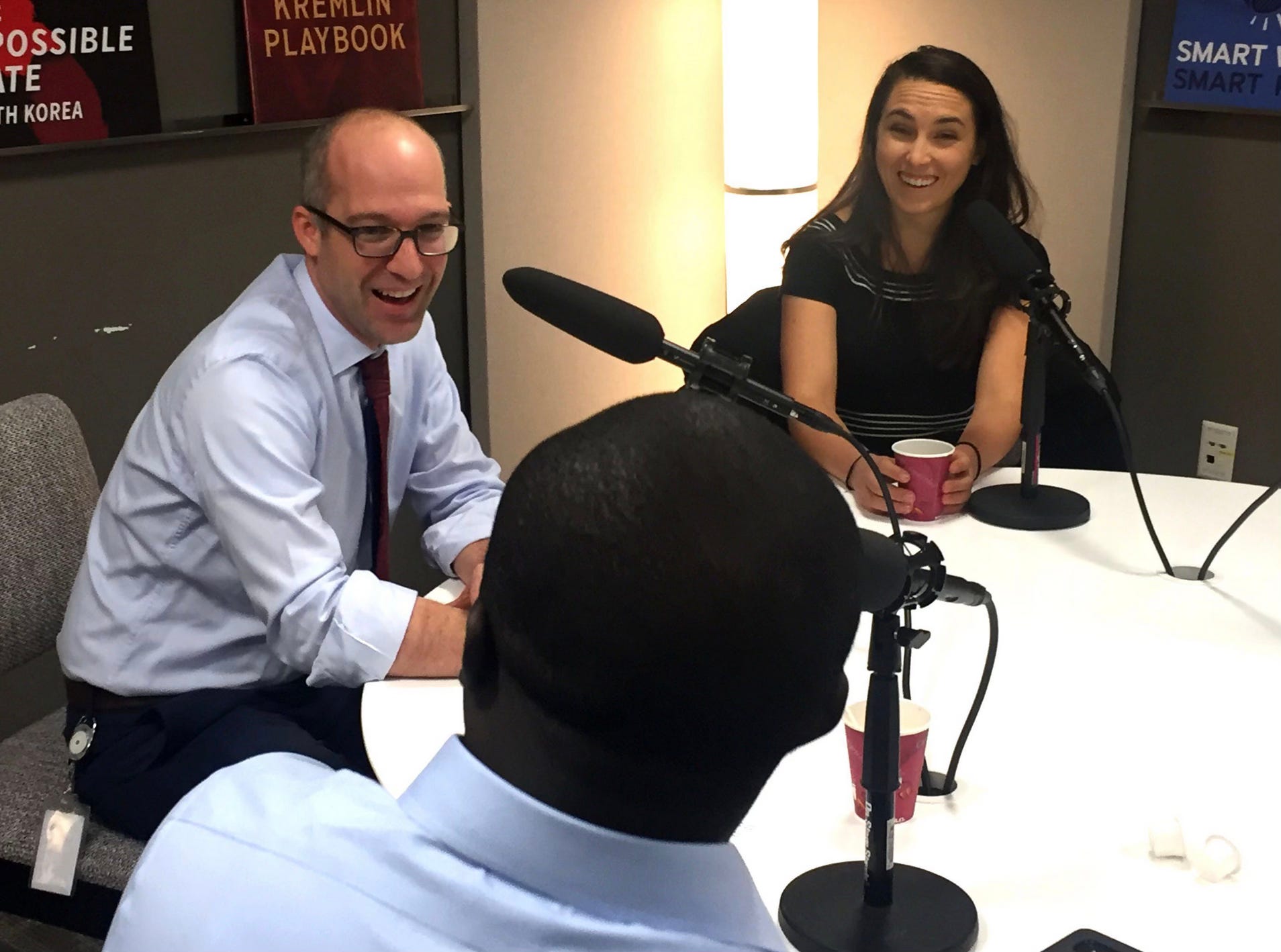
When I joined CSIS in 2018, I was eager to start my own podcast. At the time, it seemed to me that there was a real vacuum for quality content on African politics and policy. One of the few shows out there was Ufahamu Africa, hosted by my friends Kim Yi Dionne and Rachel Beatty Riedl. I desperately wanted to add my voice, hoping to create a space where experts could share their insights and still have fun. When we started talking about Into Africa, we referenced the high-energy format of Pardon the Interruption and the dinner-party pathos of David Rothkopf’s The Editor’s Roundtable (later, Deep State Radio). It was almost certainly naïve and too ambitious for a show produced by a think tank. But it crystallized for me what is often wrong about foreign policy podcasts.
Be Human
A few months ago, my former bosses Jake Sullivan and Jon Finer appeared on Semafor’s Mixed Signals to promote their podcast, The Long Game. At one point in the interview, Jake observed that the medium “gives you an opportunity to really go deeper on issues and also to talk like an actual human being as opposed to a talking points machine.” He is exactly right.
Foreign policy practitioners draw on a specific vocabulary, designed to carry the day in the Situation Room but it is utterly unappealing on a podcast. Too many guests strive to sound like an expert or have internalized this speaking style. It is a surefire way to turn off a larger audience and perpetuate the perception of foreign policy as an elite pastime. Plus, it makes listening a chore—like something you have to spend time with before an exam.
My favorite foreign affairs podcasts are anything but policy primers. They reveal who the person is behind the microphone. You don’t need to form a parasocial relationship, but you do need to make a connection. I am not a sports fan by any stretch, but I like Tommy Vietor and Ben Rhodes’s banter about the New York Knicks or New England Patriots at the top of Pod Save the World. I have been a devoted listener to Bombshell, now Sirens, because Loren DeJonge Schulman, Radha Iyengar Plumb, and Erin Simpson always start with inventive icebreaker questions. As cartoonist and writer Jessica Abel says in Out on the Wire: The Storytelling Secrets of the New Masters of Radio, “authority comes from directness and authenticity, not distance and formality.”
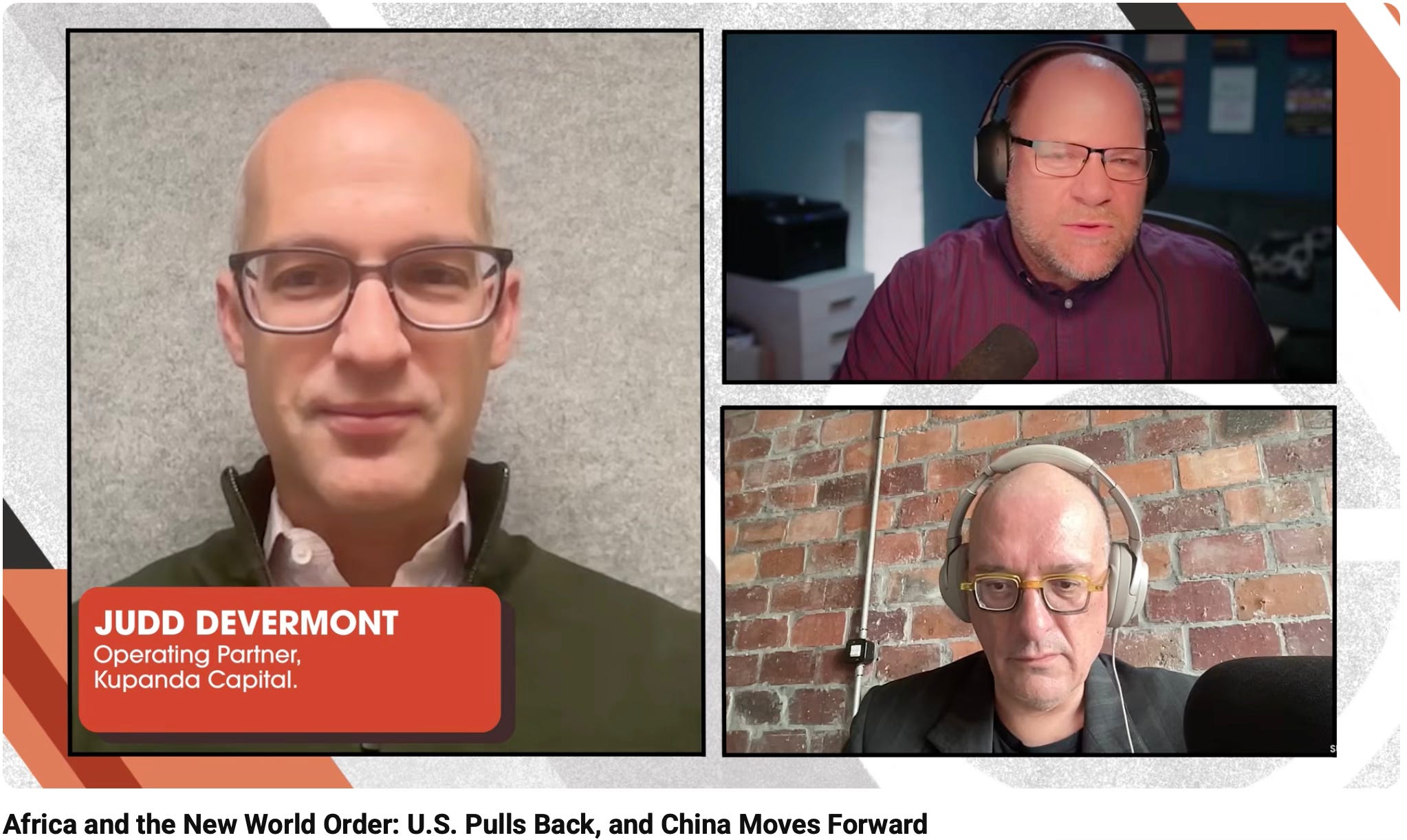
Most foreign policy podcasts fail this test. They are impersonal and emotionless, as if the rest of life stops at the recording of the show. It is even more wooden when you are a government official appearing on a podcast. I’ve been on The China in Africa podcast cohosted by my friends Eric Olander and Cobus Van Staden about a half-dozen times in different roles. When I asked an LLM to analyze my appearances on the show in 2020, 2023, and 2026, it immediately called out my inauthenticity when I was there in a government capacity. It both flattered and sideswiped me: “The 2023 interview is the clearest example of what government communication does to a person’s voice. You’re smart and disciplined in that interview, but you’re not you.” In other words, it wasn’t very good.
Keep Moving
Most foreign policy podcast guests make the same fatal mistake: they talk in paragraphs, not sentences. It is the quickest way to lose a listener. I understand the instinct. We have a lot of important, nuanced things to say. I regret podcasts where I started to enumerate 3-5 points and still had 'one more thing' to add. Podcasts are conversations, not briefings.
What keeps people listening is forward momentum. You want to hear people interject, react, and build on each other’s thoughts. The best podcasts feel interactive and dynamic. For Into Africa, I always hosted three guests on each episode to foster a real dialogue and prevent a monologue. Before we started recording, I told everyone that if they were speaking for two minutes straight, they had probably gone on too long. (Academics and former policymakers were often the worst at sticking to time.) For 49, my cohost Nicole Willet and I tried a different approach. We promised that each episode covering U.S. policy toward one country would last “15 minutes or less.” Keeping one eye on the clock forced guests to focus on what mattered most.
The problem is that foreign policy people, and especially sitting policymakers, are often less interested in a conversation. They have insights to share and points to deliver, and too often the podcast is merely the vehicle to do so. In fact, their staff is sitting right beside them scribbling notes on what additional points to add. When I recorded shows or did media hits as Senior Director for African Affairs at the National Security Council, there was always a minder in the room or on the phone with me. It was hard to be personable when you have a script to follow—and if you're not engaging, why did you come on the show?
Admit Uncertainty
A hard-earned lesson for me has been to avoid being a know-it-all. That may seem obvious in one’s personal and professional life, but it is slightly counterintuitive on a podcast. If you are being asked to analyze a recent development or explain a new policy, it is natural to adopt the posture of the expert speaking authoritatively about the subject. It is effective until it isn’t.
A good podcast guest is an open book, willing to share not only what they know but how they arrived at their conclusions. They do not need to project certainty at all times. Not only is it unlikely to be true, but it is rarely as compelling.
When I went back and listened to my 2023 interview, I never said “I don’t know.” Not once. When Eric pressed me on whether U.S. trade numbers were actually moving—a fair question—I responded, “Well, I think the results are there,” and immediately pivoted to specific deals. In my other appearances, when I was not in government, I was much more willing to admit what I did not know. Indeed, in one interview I said, "I don't know what that answer is right now. It's one of the reasons why I'm writing,” a reference to why I started this newsletter.
Of course, you do not always have to say “I don’t know” when you have doubts. But you can still be honest. When I joined Santi Ruiz on his exceptional Statecraft podcast last year, I wanted to be candid. I acknowledged that "I don't think I got that right 100% of the time” when navigating the bureaucracy and confessed that I didn’t always succeed in my objective to inject more complexity in our relationships with African counterparts.
I am not sure anyone learns anything by presenting oneself as having all the answers. Foreign affairs is inherently uncertain, and it is okay to bring listeners into that uncertainty. Even the biggest foreign policy success story has its setbacks and lessons learned—why shield the listeners from the truth that we are all fallible and struggling to get it right? There’s nothing more compelling than connecting with others by trying to make sense of a complicated world.
And Go Beyond
One final reflection. This is not about how to podcast, but where one does it. Back when I started experimenting with the medium, U.S.-based podcasts largely dominated the conversation on African politics and policy. Even now, I must admit that my podcast diet is mostly shows like The Horn, Next Africa, and BBC Focus on Africa—all of which have ties to the United States or Western media.
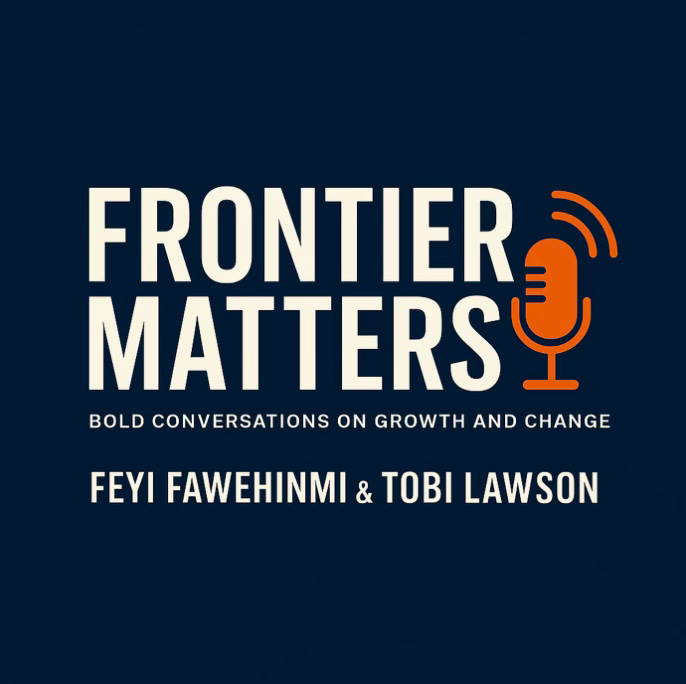
Last year, I went on Frontier Matters hosted by Feyi Fawehinmi and Tobi Lawson who also write the fantastic Substack 1914 Reader. It might have been the best and hardest interview I’ve done in my career. They asked questions like, “Do you still believe that a U.S. retreat automatically hands the keys to Beijing, or has the strategic math changed?” and pushed back with observations such as, “I find it weird that the continent with no electricity is going to decide the future of AI.”
This is the future of podcasting. We need to listen to and, if possible, participate in podcasts being produced by African content creators. I Said What I Said is a cultural phenomenon in Nigeria, while Podcast and Chill commands a massive audience in South Africa. Kenya has its own thriving podcast ecosystem as well. Most of these shows are about entertainment or relationships, but that’s where the most riveting content and conversations are happening. If we limit ourselves to the same small subset of foreign affairs podcasts, how will we ever break through with new, more impactful policies?
Post Strategy
I am convinced that foreign policy podcasts work best when they stop sounding like foreign policy. We can’t treat them like a panel discussion at a think tank. Podcasts will only become more important and rewarding if we depart from the old ways of explaining policies, analyzing developments, and talking to the same people. None of this will be easy, but I’m going to fight the urge to always present as an expert. If we want to change the conversation, we have to admit that we don’t have all the answers.
I think that regardless of the medium, communicating complex ideas to a general audience, whether through writing or on podcast, is an acquirable skill. Guesting on podcasts may well be the next frontier for improving this.