
On Sports
Why it's more about statecraft than you think

When I was a government analyst, I made a big deal out of the semifinals of the Africa Cup of Nations (AFCON) tournament in February 2015. As I recall, the National Security Council responded with slight bewilderment: “what are we supposed to do with this?” Truth be told, I didn’t know either. I just believed it was important and we were missing an opportunity to connect with a broader audience.
I should admit that I don't follow sports particularly closely. But I am embarrassingly predictable: if there's an Africa connection, I'm interested. So, naturally, I rooted for and was heartbroken by Cabo Verde's loss to Argentina in the Round of 32 of this year's World Cup. What has long fascinated me, however, is how sports shapes politics, identity, and public life across the continent. Just as important, what should the United States do about it? Is there a diplomatic and policy play? In June 2019, I asked the same questions to a panel of experts and raised similar points on my podcast Into Africa. The answer is yes. To all of it.
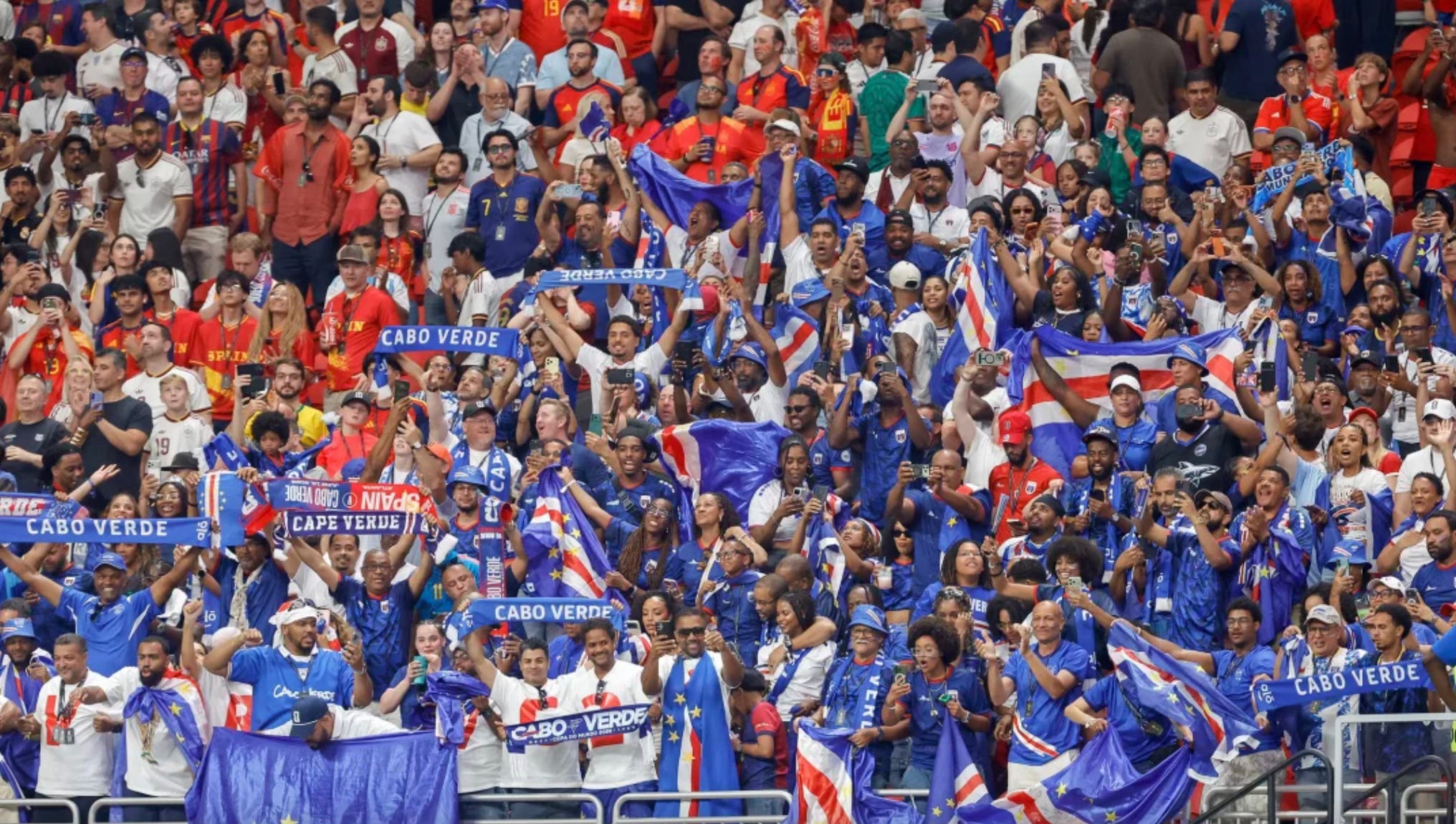
A key part of effective policy is the art of bridging divides. They can be geopolitical, ideological, or cultural, existing between governments, populations, or even individuals. The goal is to find common ground, forge a connection, and eventually align on decisions or actions that advance your objectives. Usually, U.S. officials pursue that through persuasion, making an argument that might win the day or offering incentives to encourage a different course of action. But sports can accomplish the same objective. While it is more indirect and a little harder to measure, few things connect to a person’s sense of identity and nationhood more powerfully than sports. And we don’t leverage it enough in our policies toward sub-Saharan Africa.
Sports as Connection
When U.S. officials show an interest in a country’s sporting teams, it is more than just a symbolic gesture. It is a sign of respect and an acknowledgment of a nation’s prowess and soft power. It can be profoundly important for strengthening ties. In August 1963, President John F. Kennedy phoned Nigerian Prime Minister Tafawa Balewa in what is believed to be the first two-way call between heads of state via satellite. Between the pleasantries and an aside about the Test Ban Treaty, Kennedy warmly noted Nigerian boxer Dick Tiger’s recent victory as undisputed world middleweight champion. It was a smart move. Kennedy aligned himself with a patriotic Nigerian whose trainer told The New Yorker that “he wants to win the title for Nigeria, like it was a Nobel Prize.”
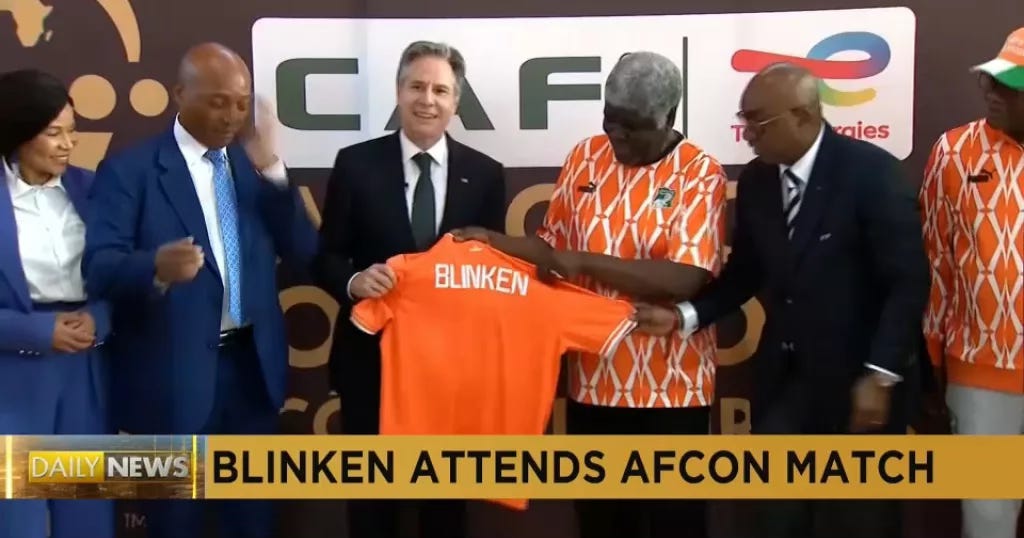
When I was in policy, I had an ambition to do the same. I had proposed that President Barack Obama visit Nigeria and participate in a football clinic with the Super Eagles which had recently won the AFCON trophy in February 2013. I pitched it as part of the First Lady’s “Let Move!” initiative. (Of course, neither the trip nor clinic happened.) A decade later, I did successfully added a line about Angola’s national team in Secretary of State Tony Blinken’s press availability with Foreign Minister Tete Antonio in January 2024. Sadly, I can’t take any credit for the Secretary’s attendance at a match in Abidjan a few days earlier. I thought it was a brilliant stroke. An African journalist later commented that “Blinken watched an AFCON fixture in a stadium China gifted to Ivory Coast. Equally interesting that his Chinese counterpart - Wang Yi - who was in Abidjan before Blinken didn’t spare a moment to watch football.” It felt like we scored a point for the USA.
Sports as Counterbalance
U.S. engagement through sports serves another policy purpose. It can soften contentious relationships with governments. Whether through American athletes or personal interactions, sports creates opportunities to transcend political differences, preserve channels of communication, and connect with publics. The historical record is full of examples:
U.S. diplomats leveraged sports to counter Malian hostility during the 1960s. In an oral history, a former public affairs official recounted that “the main access that we had really was personal contact largely through sports programs.” He pointed to visits by track and field icon Wilma Rudolph and a trio of Boston Celtics as extremely effective in reaching the younger population.
In the 1980s, Ambassador Alan Hardy used his regular tennis matches with Equatoguinean leader Teodoro Obiang Nguema Mbasogo to keep the Embassy running and push policy in a difficult environment. He implored Obiang to ensure the Embassy had fuel for its generators and pressed him to eventually hold local elections. Hardy underscored that he had better access than his French and Spanish counterparts.
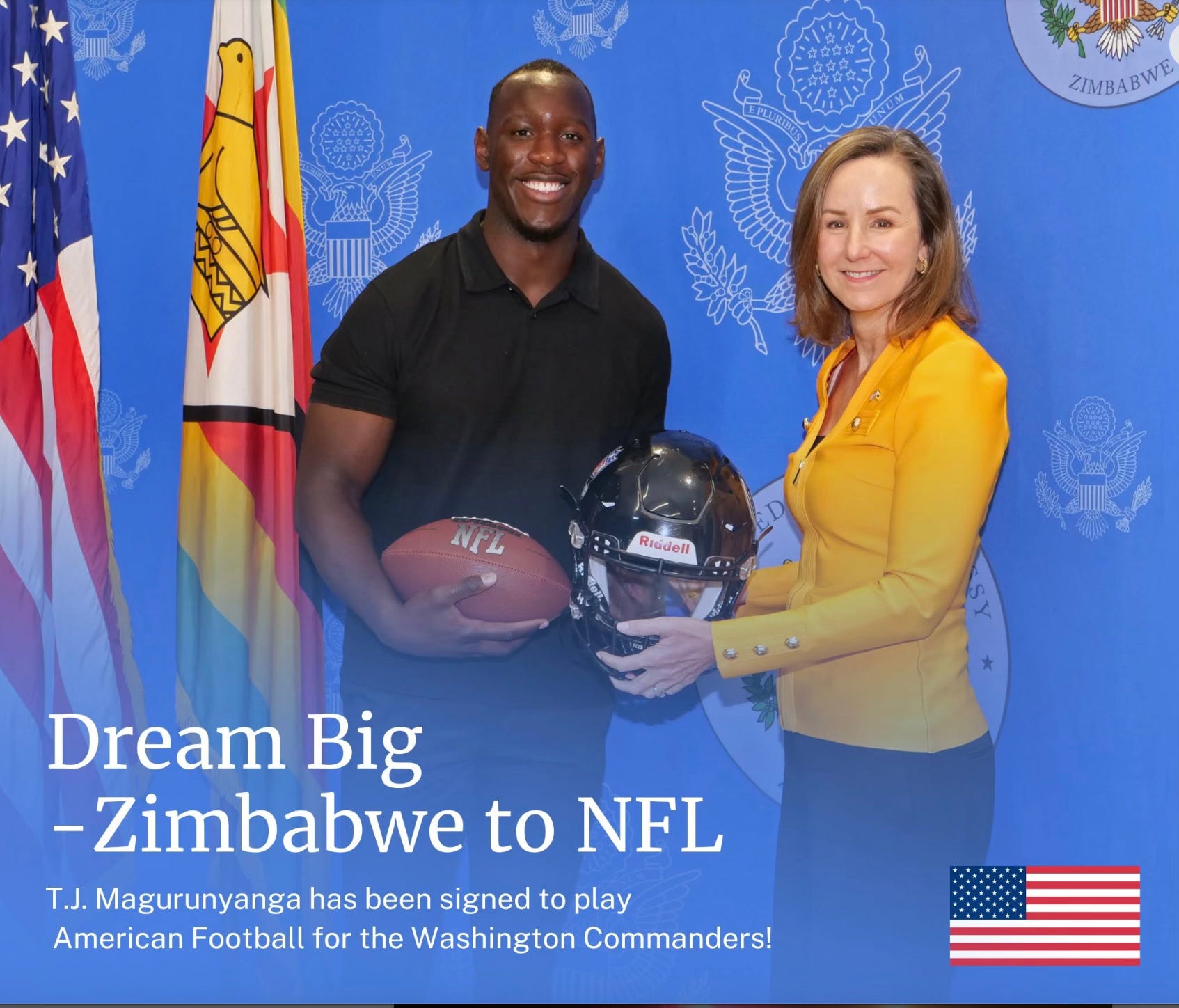
In Zimbabwe, the U.S. Embassy leaned on the power of sports to address the HIV/AIDS crisis in the 1990s. A former Ambassador shared that they paid for television ads that featured the national team championing the importance of condoms to prevent the spread of the disease. Sports diplomacy remains one of the few bright spots in the relationship; last week, the Embassy and Washington Commanders defensive end TJ Maguranyanga hosted a football camp for young Zimbabweans.
Sports as Censure
While sports usually strengthens relationships, it can also serve as a tool of censure against repressive regimes and geopolitical rivals.
The international sporting community banned apartheid South Africa from football, rugby, cricket, and other global sporting events. In his book, African Soccerscapes: How a Continent Changed the World’s Game, Peter Alegi explains that FIFA’s suspension of South Africa in 1961 was a “major blow to the apartheid regime” and “raised awareness of the injustices of apartheid among sports fans around the world and instilled hope among South African liberation movements.” FIFA also suspended Rhodesia’s membership until majority rule was achieved in 1980.
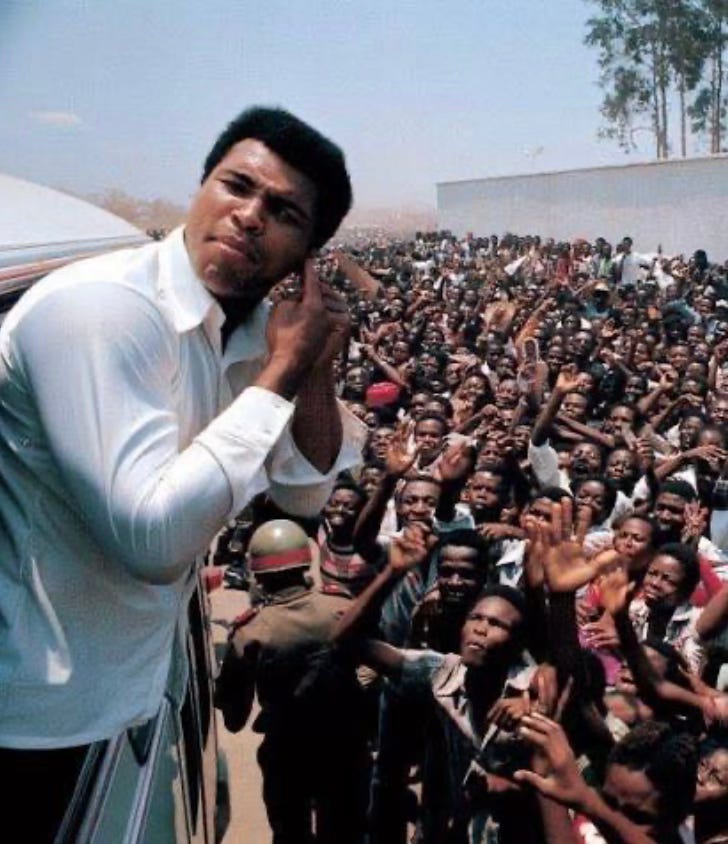
President Jimmy Carter enlisted Muhammad Ali to persuade African countries to boycott the 1980 Olympics in Moscow. Ali went to Tanzania, Kenya, Nigeria, Liberia, and Senegal, earning admiration from one U.S. diplomat for “his sense of timing and his ability to get inside his interlocutor’s head and heart.” Eighteen sub-Saharan African countries ultimately opted to skip the Olympics that year. In retaliation, the Soviet Union convinced Angola, Ethiopia, and Upper Volta to boycott the subsequent Olympic games in Los Angeles in 1984. (Side note: Upper Volta declined to participate in both the Moscow and Los Angeles Olympic Games, a unique distinction presumably explained by multiple coups during this period.)
In some cases, countries have been excluded from sporting events or prohibited from hosting due to human rights, insecurity, or corruption. In 2019, the Confederation of African Football (CAF) stripped Cameroon of its right to host the Africa Cup of Nations after serious delays in its preparations and amid a violent separatist rebellion near two planned venues. There have been non-African examples too. Russia lost its hosting rights and barred from numerous events after invading Ukraine in 2022. In 1992, Yugoslavia was banned from Euro 1992 due to UN sanctions over the Balkan wars. In general, though, CAF and FIFA have been reluctant to make political judgments about which governments should host major tournaments.
And Sports as Reinvention
There’s one more thing. I believe sports may offer an opening to resuscitate the image of the United States at some point in the future. Clearly, there are more substantive issues to address, from noxious immigration policies to paternalistic approaches to bilateral relations. But sports diplomacy will be an important avenue to reconnect with African governments and populations while reinventing how the United States engages with the region. We can borrow ideas from other parts of the world and build on both our successes and failures in Africa.
Adopt a team. U.S. Ambassador to South Korea Mark Lippert became a devoted fan of the KBO baseball team Doosan Bears during his tenure in Seoul from 2014 to 2017. He later told Pod Save the World co-host Tommy Vietor, “I think the best part about it is when you are interested in Korean culture, Korean society, Koreans reciprocate and they reciprocate tenfold, right? And it becomes this great virtuous circle...We decided that baseball was going to be one of our things.” (On a related note, I have been told that Diplomatic Security has discouraged our ambassadors from attending local sporting events. If true, that is something we should rectify.)
Promote U.S. events. During the Rumble in the Jungle boxing match between Muhammad Ali and George Foreman, the U.S. Embassy in Kinshasa decided to adopt a “low profile.” The Department of State also declined to support the accompanying music festival. These were clearly missed opportunities. In the future, the United States should lean into major sporting events, as well as work with promoters and sporting leagues to host tournaments and exhibitions between U.S. and African teams.
Celebrate African Excellence. When the United States denied entry to Somali referee Omar Artan because of “vetting concerns,” UEFA, in response, selected him to officiate the 2026 UEFA Super Cup on August 12 between Champions League winners Paris Saint-Germain and Europa League winners Aston Villa. UEFA President Aleksander Čeferin praised Omar Artan as “an excellent young but already experienced referee, who has proven himself at the highest competition level of the Confederation of African Football.” The United States should seek out opportunities to showcase African excellence, whether through invitations to meet senior U.S. officials or other high-profile engagements.
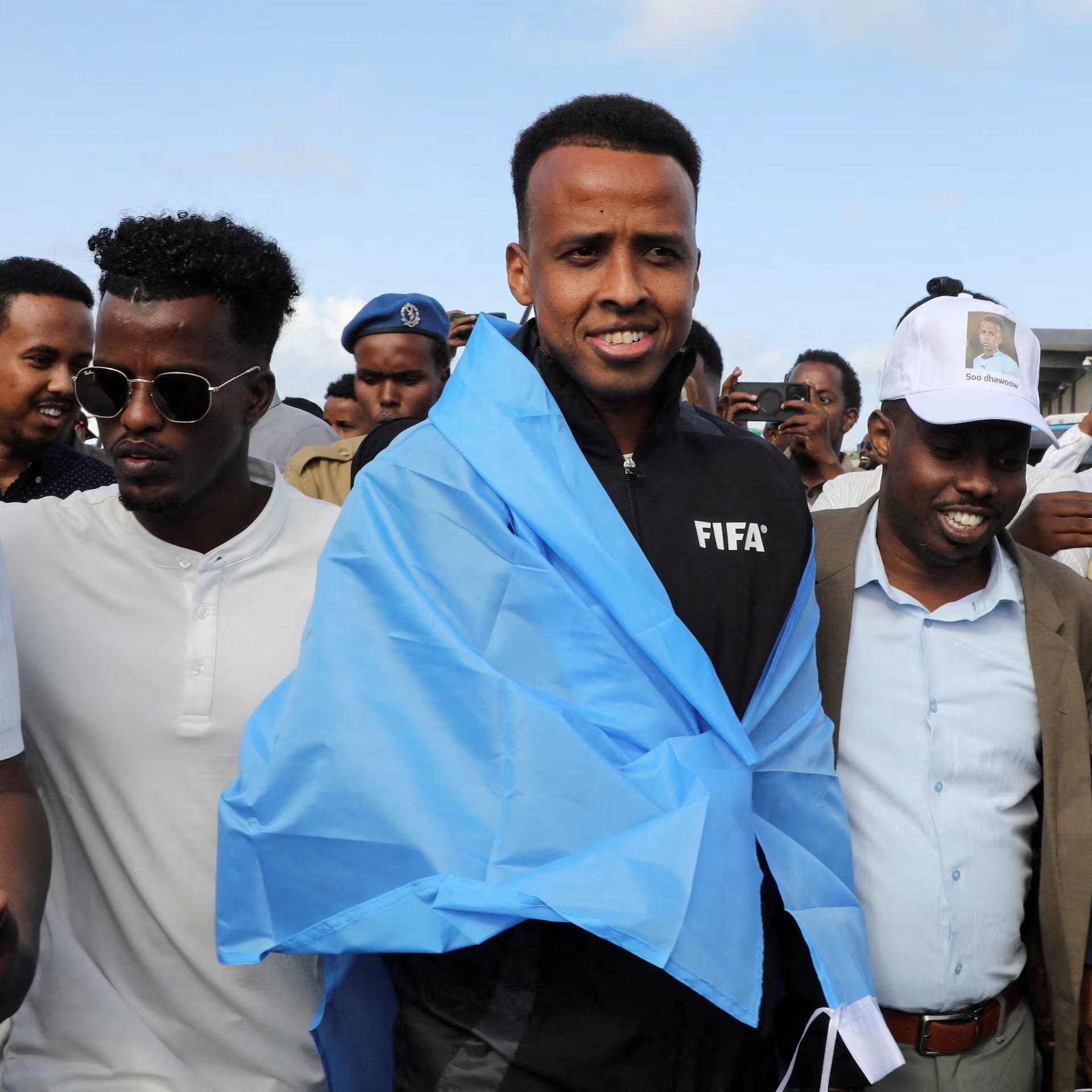
Of course, all of this seems unlikely in the near term. The Trump Administration has drastically reduced the budget and staffing of the State Department’s Bureau of Educational and Cultural Affairs (ECA), which oversees sports diplomacy. It is also exceedingly difficult when most embassies in the region are operating without Senate-confirmed ambassadors and only 20 embassies and consulates are processing visas. A more ambitious approach will only come when our diplomats are empowered and resourced to experiment, build partnerships, and think bigger.
Post-Strategy
I am convinced that sports is an essential, if often overlooked, part of the policy repertoire. If we want to build durable, mutually beneficial partnerships with African counterparts, we need to do more than just persuade and provide assistance. We need to show that we value what our partners are passionate about. And there’s almost no better subject than sports. As Peter Alegi said to me in 2019, by paying attention, “the United States would simply demonstrate sensitivity to what African people care about, which most definitely includes sports.” Policies come and go, but showing up is what drives effective statecraft.
I remember Blinken attending that match in Ivory Coast - if I remember correctly it was a horrible defeat to Equatorial Guinea that almost knocked the host side out of the competition. He offered words of commisseration afterwards. In a remarkable turnaround they somehow still qualified because of other results going their way, and went on to win the competition.
Interesting post, as always! To note, athletes sent abroad in the early African independence days were majority African Americans--part of the campaign to counter perceptions of racism in the US.