
On Sanctions
Sanctions are poor substitutes for strategy. Why are they so popular?

There has been a lot of action in the sanctions space lately. From de-listing Malian junta leaders to designating the Rwandan military, each action has attracted major media attention as well as public acclaim or condemnation—depending on where one stands on the issue. Sanctions can seem bold and decisive. That is often the problem.
I’ve spent my career as an intelligence analyst, think tank expert, and policymaker dealing with sanctions programs. I’ve argued for them, objected to them, imposed them, and dismantled them. I’ve felt all the feelings too—vindication, righteousness, embarrassment, satisfaction, resignation, and relief. I guess that’s why I want to write about this subject. Sanctions are not a substitute for policy, and yet they loom over almost every U.S. decision regarding Africa. We need to take a deeper look at why sanctions are so appealing—and ask ourselves how to avoid reflexively using them in U.S.–Africa policy.
Let’s start by sorting through the different types of sanctions. The most known are those imposed by U.S. presidents through Executive Orders (E.O.s). These country-level or issue-focused programs allow the U.S. Treasury (or in a few cases, the State Department) to block or freeze the assets of designated individuals and entities, as well as prohibit U.S. persons from engaging with them, including through transactions in U.S. dollars. In addition, Congress has established a number of sanctions authorities that either build on the Executive Branch’s actions (which has happened several times in Iran) or, notably, through the Global Magnitsky Act (“GloMag”) target individuals responsible for serious human rights abuses or corruption.
But these kinds of sanctions are only one way to impose costs. The United States can also suspend visas, issue business advisories, cut foreign assistance, terminate military training, prohibit arms sales, impose export controls, recall ambassadors, expel diplomats, lead global boycotts, support divestment campaigns, flag states as high-risk jurisdictions, add countries to human rights watchlists, designate governments as sponsors of terror, and block votes at international financial institutions. While the U.S. government employs many of these coercive tools, there is usually a preference for the Treasury sanctions. That’s a mistake.
Seduced by Sanctions
When I served as Senior Director for African Affairs in the Biden Administration, we leaned on sanctions to respond to conflicts, human rights abuses, corruption, terrorism, and other national security concerns in a host of countries and regions. Looking back, I am slightly shocked by the breadth of the sanctions we imposed: we sanctioned individuals and entities in the Central African Republic, Democratic Republic of the Congo (DRC), Eritrea, Guinea, Liberia, Mali, Nigeria, Rwanda, Somalia, South Africa, South Sudan, Sudan, Uganda, and Zimbabwe. And that doesn’t include visas and other penalties.
So what was the rationale behind this dizzying number of sanctions? The intent, at least in theory, is to change a target’s behavior and to advance U.S. foreign policy goals. And that’s true in some cases, especially those where we believed punitive action might deter foreign actors from continuing to wage war or steal from state coffers. If we increase the pressure, so the argument goes, perhaps a government might repeal an egregious law or refrain from boosting a geopolitical adversary’s influence. I stand behind those decisions—even if the outcome didn’t always work out as planned.
Unfortunately, some of our sanctions weren’t really about advancing policy. Their main attraction was what they conveyed: a forceful response. They were about doing something because we didn’t have good options. They signaled action when, in truth, they reflected helplessness. They showed resolve when, in reality, there was indecisiveness. And they demonstrated engagement when, in fact, there was distraction. It is not surprising, then, that the U.S. Treasury in 2021 bemoaned that sanctions had become “a tool of first resort to address a range of threats to the national security, foreign policy, and economy of the United States.”
To be fair, I argued hard for many of these sanctions for the above reasons. With the civil war raging in Sudan, for example, we wanted to express our anger and disapproval at the senseless violence. We also needed a response to the (totally fair) domestic and international criticism that we weren’t doing enough. Our first tranche of sanctions, designating two companies associated with the Sudanese Armed Forces (SAF) and two companies linked to the Rapid Support Forces (RSF), had the patina of strategy because these companies directly enabled the war effort. Did I think it would stop or even slow the war? Not really.
Stymied by Sanctions
Here’s my problem with most sanctions. Despite the satisfaction of taking action, many of these punitive measures are fairly empty, at least in the case of Africa. They are symbolic, not substantive. They seem almost designed to remain in place forever—or at least for a very long time. I can attest to how frustratingly hard they are to remove, even when they have lost their policy relevance. Most importantly, they can limit U.S. actions, undercut U.S. priorities, and lead to unforeseen consequences. In other words, many sanctions programs are more trouble than they are worth.
Symbolic. Some sanctions on individuals, especially in Africa, are reputational only and fail to inflict penalties that spur behavior change. That’s because most sanctions only bite if an individual has a nexus to the United States, meaning they own a bank account or property. For instance, when we impose sanctions on rebels or terrorists in Burundi, Côte d’Ivoire, DRC, Mali, or Somalia, the material effect is often negligible. The same principle applies to visa sanctions because many of those designated aren’t likely to travel here.
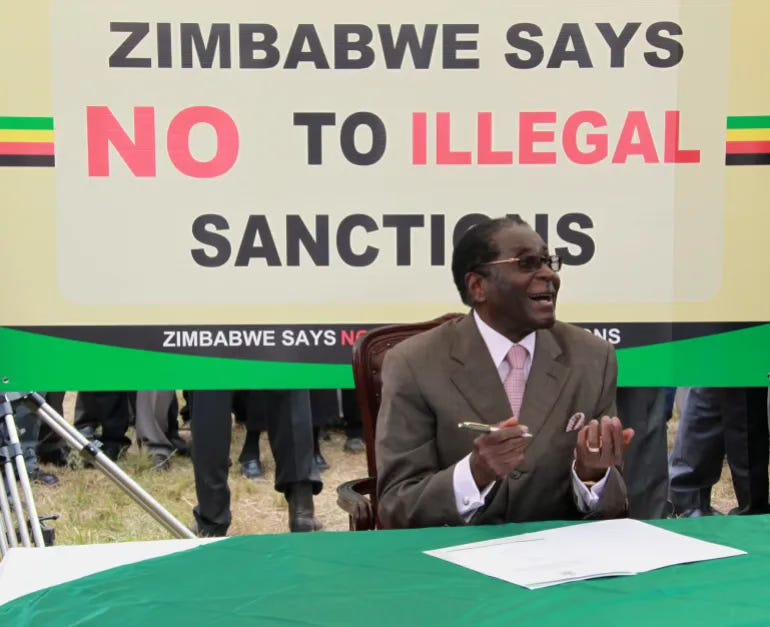
Sticky. Sanctions programs are notoriously difficult to reverse or dismantle, diminishing their strategic value. For example, Nelson Mandela remained on the U.S. terror watch list until 2008, despite winning the Nobel Peace Prize in 1993, addressing a joint session of the U.S. Congress in 1994, and meeting with President Bill Clinton in the Oval Office. When I worked in the Obama White House, we started the long process to terminate the Liberian sanctions in 2015, even though warlord-turned-president Charles Taylor and his cronies had been out of power for a decade. I have a forthcoming article with Brad Brooks-Rubin on our painstaking efforts to sunset the two-decade-old Zimbabwe sanctions program during the Biden Administration.
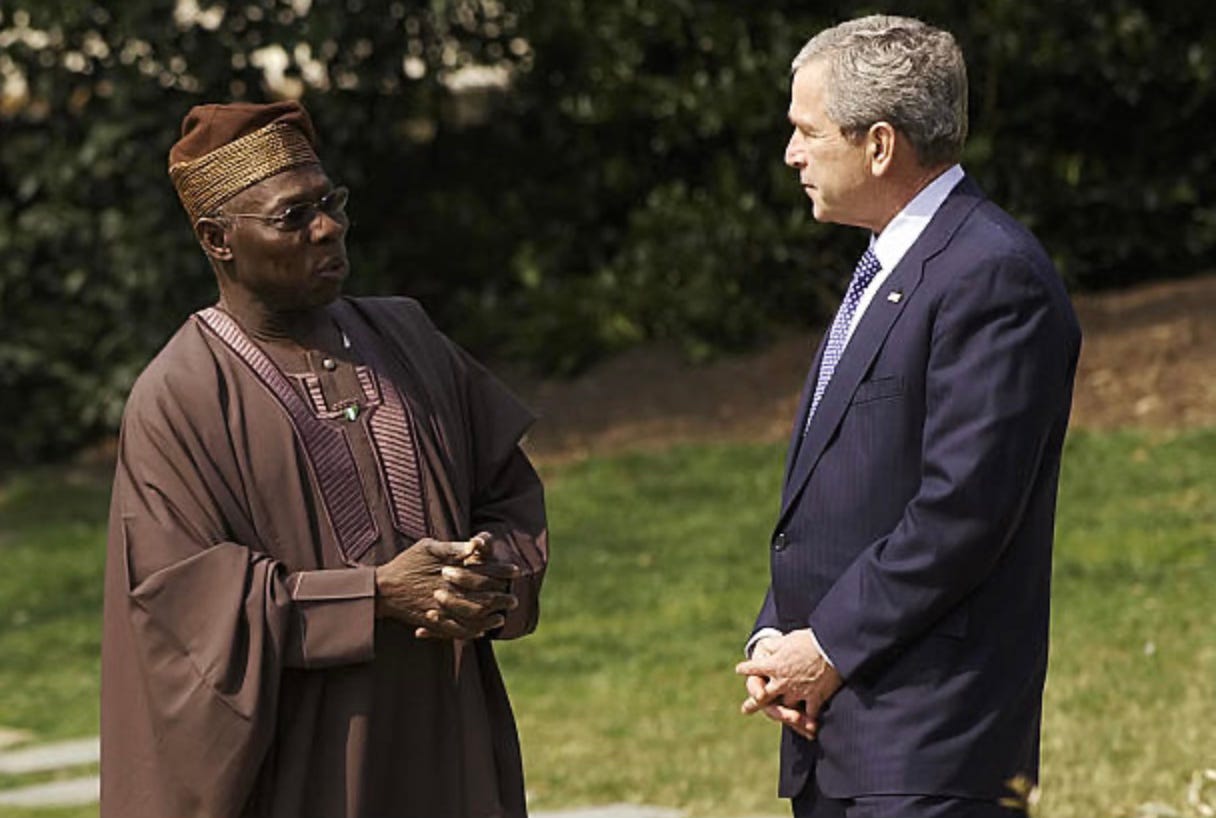
Stifling. The biggest problem with the majority of sanctions is that they limit policy options. Past U.S. officials have objected to sanctions and other restrictions that tied their hands. In 2005, for example, the U.S. Congress included an amendment to a supplemental appropriations bill to withhold or condition Foreign Military Financing (FMF) and other military aid to Nigeria because it provided asylum to Charles Taylor. This made it harder to find a resolution, while punishing one of our closest partners in the region. This happens a lot, actually. We suspend trading preferences or cut off cooperation because we object to their foreign or domestic policies, even though the collateral damage hurts U.S. interests as much as it pressures the target.
Success by Sanctions
I need to make myself clear: I’m not opposed to sanctions. There are and will continue to be good reasons to impose punitive measures, but they should be focused, flexible, and tied to an overall strategy. As many scholars and practitioners have argued, most sanctions do not work. I think that is especially true in U.S.–Africa policy. The few successful case studies are the exceptions that prove the rule. In most of these examples, the pressure extended beyond economic sanctions and applied leverage in more novel ways. They did more than punish; they created a pathway to resolve a pressing problem.
Comprehensive. Sanctions aren’t one thing, and they can’t be separated from engagement. For example, the United States imposed a series of sanctions on the apartheid regime in South Africa. Overriding President Ronald Reagan’s veto in 1986, the U.S. Congress passed the Comprehensive Anti-Apartheid Act requiring various U.S. departments and agencies to restrict funds and assistance, as well as withdrew landing rights for South African Airways. These sanctions both followed and intensified a divestment campaign and boycott of South Africa in many international sporting events, including the Olympics. But even with sanctions, there was vigorous diplomatic engagement, including phone calls and meetings between Presidents George H.W. Bush and Bill Clinton with prominent South African leaders.
Conditional. The most effective sanctions create clear “if/then” dynamic: specific actions in exchange for specific relief. Sudan has faced decades of sanctions for human rights abuses, genocide, civil war, and support for terrorism. The United States withdrew its ambassador twice, in 1973 and 1997; paused assistance after the 1989 military takeover; designated Sudan a state sponsor of terrorism in 1993; suspended embassy operations in 1996; imposed broad economic sanctions in 1997; and added further sanctions in 2007. The escalating sanctions enabled President George W. Bush to compel the Sudanese government to allow African peacekeepers into the Darfur region and President Barack Obama to condition some sanctions relief on a reduction of hostilities in Darfur and the Two Areas; greater humanitarian access; an end to meddling in South Sudan; enhanced counterterrorism cooperation; and addressing the threat of the Lord’s Resistance Army (LRA). In October 2020, President Donald Trump removed Sudan from state sponsors of terrorism list.
Constructive. The strongest coercive tools do more than punish; they create a transparent framework for institutional reform and eventual normalization. For example, the Financial Action Task Force (FATF) focuses on tackling money laundering and terrorist and proliferation financing. It “blacklists” or “grey-lists” countries with weak compliance regimes. This has proven to be a strong motivator, spurring governments to institute the necessary reforms to get off these lists. Another example is the U.S. State Department’s Trafficking in Persons (TIP) program, which evaluates a government’s efforts to eliminate human trafficking within a tier system. If a government is placed on Tier 3, it may be subject to certain restrictions on foreign assistance. This approach not only fosters a dialogue about necessary steps, but it often results in positive action. I’ve seen similar frameworks work exceedingly well; in January 2010, for example, U.S. Transportation Security Administration (TSA) designated Nigeria as a “country of interest” following the failed Christmas Day 2009 bombing attempt. The Nigerian government made it a top priority to address U.S. concerns, getting itself off the list by April.

A few broader lessons emerge from these cases. First, diplomacy is integral to the process. Sanctions may deliver a “punch in the face,” as Brad Brooks-Rubin colorfully put it on the Africa Program podcast, but the real goal is to generate leverage and open space for diplomacy to work. Second, it showcases the importance of a diverse set of coercive tools. The aforementioned examples did not rest solely on Treasury sanctions against individuals and entities—or even on visa restrictions. There was a deliberate attempt to bring multiple pressure points to bear from the executive and legislative branches, as well as from public and international engagement. Unfortunately, we rarely use the full repertoire anymore. We have seldom recalled ambassadors, as we did in Sudan in 1998 and briefly in Nigeria in 1995, and we have largely eschewed more visible forms of public pressure, such as boycotting or banning countries from international sporting events.
Context Matters
What I’ve learned the hard way is that context matters as much as the sanction itself. Even when circumstances seem relatively similar, small or subtle shifts can derail the same policy play. During the Biden Administration, we faced two challenges that had also bedeviled the Obama team in the Great Lakes: the M23 rebellion in eastern Congo and Uganda’s Anti-Homosexuality Act. We consequently reached for the same mix of individual sanctions and assistance cuts. We weren’t successful in part because the domestic and international context had changed. This also happened in our response to coups in the Sahel. As I discussed in my earlier post on military takeovers, we struggled to wrap our heads around the newfound support for military rule and the rise of external powers willing to back the juntas. It shredded the old playbook.
The same principle applies to multilateral cooperation on sanctions and other punitive measures. We often worked closely with G7 countries on these issues, ensuring we were aligned. It can be quite powerful, especially because other governments often provide direct budgetary support. However, keeping the coalition together was a 24-7 job. Certain countries wanted to change their votes at international financial institutions or ease pressure in order to pursue different objectives, such as migration.
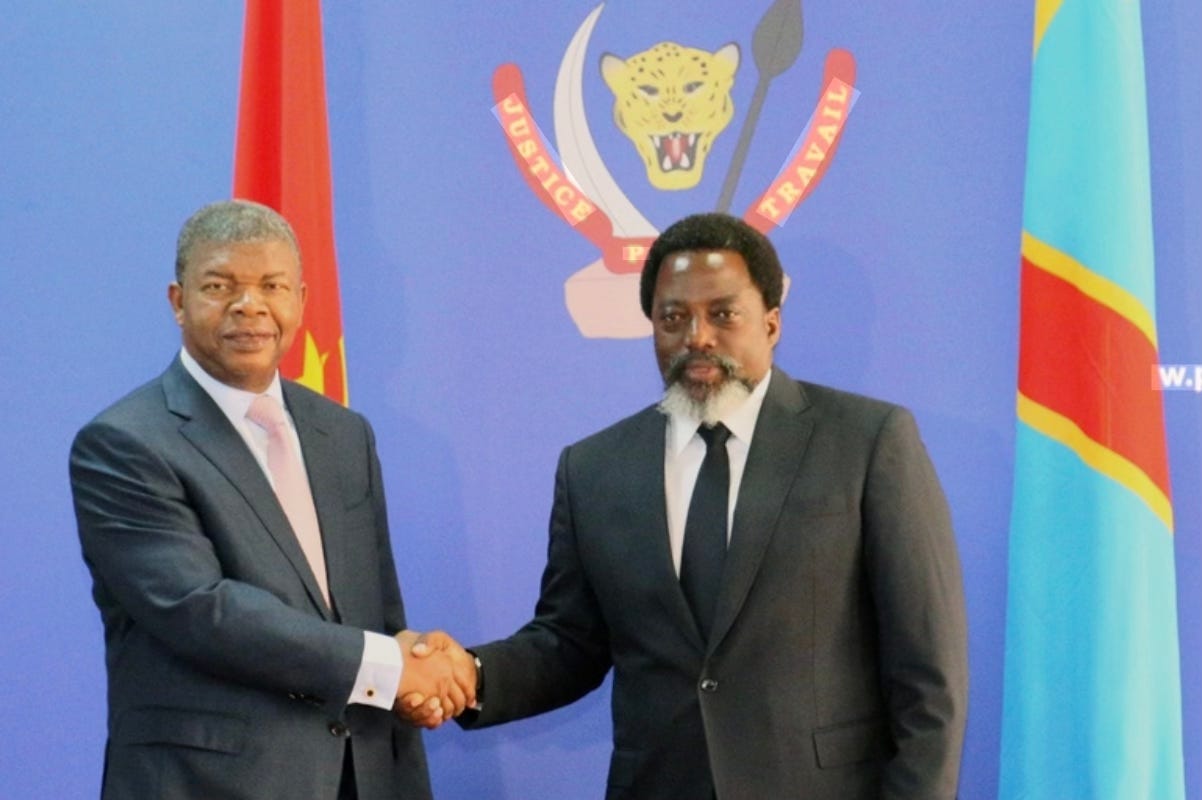
Finally, I found that our African partners can be force multipliers. They can add diplomatic muscle to these efforts, as Angola did when it pressed DRC President Joseph Kabila to give up his attempt to remain in power in 2018, or as East African leaders did when they imposed sanctions on Burundi in 1996. Nelson Mandela led the effort to isolate Nigerian ruler Sani Abacha after the execution of writer and activist Ken Saro-Wiwa in 1995. But it can also backfire. ECOWAS, the West African regional body, went too far by cutting Niger off from regional banks, blocking medicine and food imports, and shutting off electricity as part of failed attempt to restore democracy there.
Post Strategy
I am convinced that sanctions are useful, but only when tied to specific policy goals and paired with active diplomacy. Despite the temptation, we need to resist treating the imposition or removal of sanctions as bold or decisive. They are not.
Sanctions are just one of many tools at our disposal, and in many cases there are more creative and more effective options within reach—ones less likely to impair other priorities or constrain future decision-making. It raises the question: if sanctions didn’t grab headlines, would we use them so often? I suspect the answer is no.