
On the Near East
U.S.-Africa policy has become entangled with the Near East. It needs rebalancing.

I have a theory. In policy, as in life, we tend to overlearn lessons to our detriment. That was my experience engaging with the Near East. For me, it started with the 2011-12 Somali famine when Muslim and Arab countries heroically contributed nearly 30 percent of the humanitarian aid. It was an extraordinary act, but it set us on the wrong path.
For those of us committed to advancing U.S. policy toward sub-Saharan Africa, the idea of closer cooperation with Near East countries was tantalizing.1 It promised an influx of resources and a reservoir of credibility that our partnerships with former colonial powers plainly lacked. It began to feel like a cheat code—a way to unlock influence despite tight budgets and finite bandwidth. A decade later, the results of that shift have been more complicated than anticipated. Getting it right again will require a rebalancing.
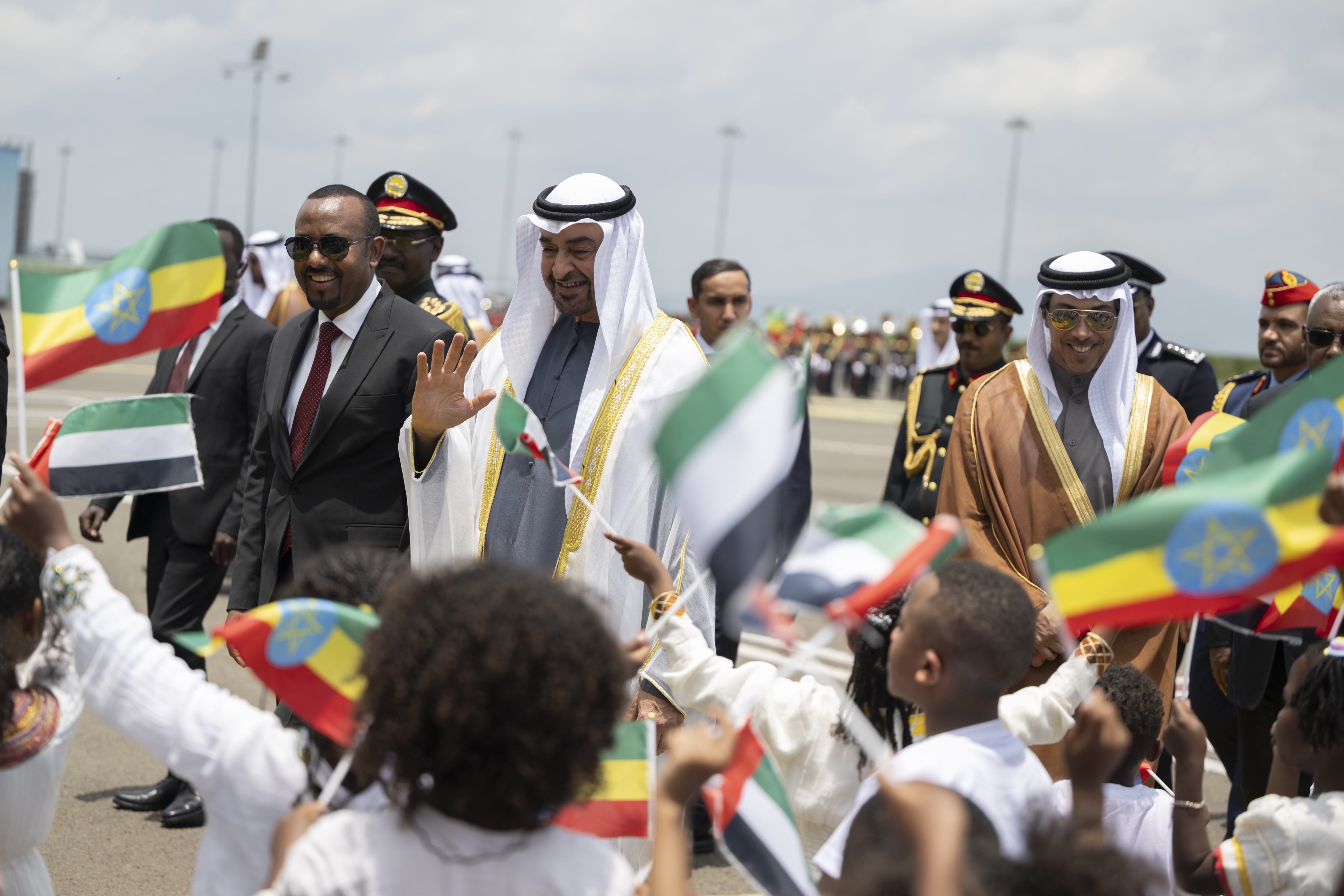
In the months and years following the Somali famine, a cottage industry sprang up to extoll the virtues of deeper engagement and reimagining the Red Sea as a new geopolitical arena. Foreign policy specialists, myself included, started to publish papers and podcasts on the topic. It reflected a changing international landscape as the Gulf States and Turkey increased their diplomatic presence, enlarged their security footprint, and funneled significant capital into agriculture, infrastructure projects, and health systems, particularly during the COVID-19 pandemic.
We weren’t naive. We recognized that geopolitics, domestic agendas, and regional rivalries were problems to be managed. A U.S. Institute of Peace report, for example, acknowledged that “the external actors responsible for instability in the Red Sea are not primarily U.S. rivals—that is, China and Russia—but namely Qatar, Saudi Arabia, Turkey, and the UAE.” In 2018, I warned that “if this new dynamic is poorly managed, it could derail the region’s progress and entangle it in international disputes,” noting how the split between the UAE and Saudi Arabia on one side and Qatar and Turkey on the other threatened to unravel some of Somalia’s hard-earned progress. Upon reflection, however, I think our enthusiasm for cooperation outweighed our reservations, and our confidence in U.S. influence outstripped our capabilities.
The Best-Laid Plans
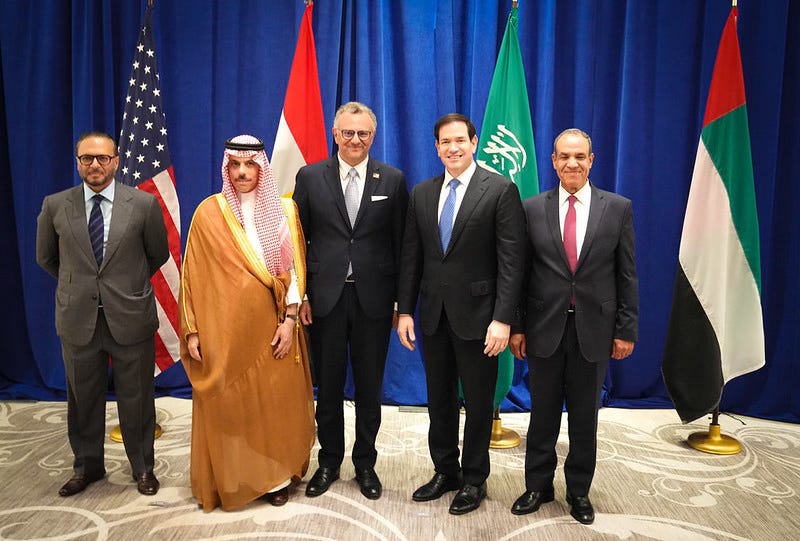
This diplomatic realignment went astray fairly quickly, especially in the Horn of Africa. During my time in the Biden Administration, we established quints and quads with Near East countries to press for transitions and ceasefires. We encouraged investments in strategic sectors, including data centers and ports. We partnered to resolve diplomatic disputes. Although we had some successes, it became increasingly difficult to deny that these budding relationships also were undercutting U.S. influence and straining U.S.-Africa ties.
Denied Leverage. Our close partnerships with certain Gulf states paradoxically made it harder to engage in frank conversations about destabilizing actions in the region. Amid reports of UAE support for the paramilitary Rapid Support Forces (RSF) in Sudan, most U.S. private engagements and public statements treaded lightly on the matter. And when U.S. Special Envoy for Sudan Tom Perriello addressed the issue on a podcast, it ignited a diplomatic firestorm. The UK also experienced blowback following a UN Security Council meeting. The result has been less U.S. leverage, not more.
Unequal Tradeoffs. As the two regions became more intertwined, the pressure to make deals at the expense of U.S.-Africa priorities intensified. During the Trump and Biden Administrations, there was pressure to sign up more countries to the Abraham Accords with Israel, even when that required circumventing or complicating our existing bilateral policies toward those African actors. At one point, I was asked to reallocate funding from Africa to support a Near East priority. (For the record, I wasn’t opposed to the idea—just bewildered by the suggestion that it be taken out of our minuscule Africa budget rather than drawn from the far more resourced Near East account.)
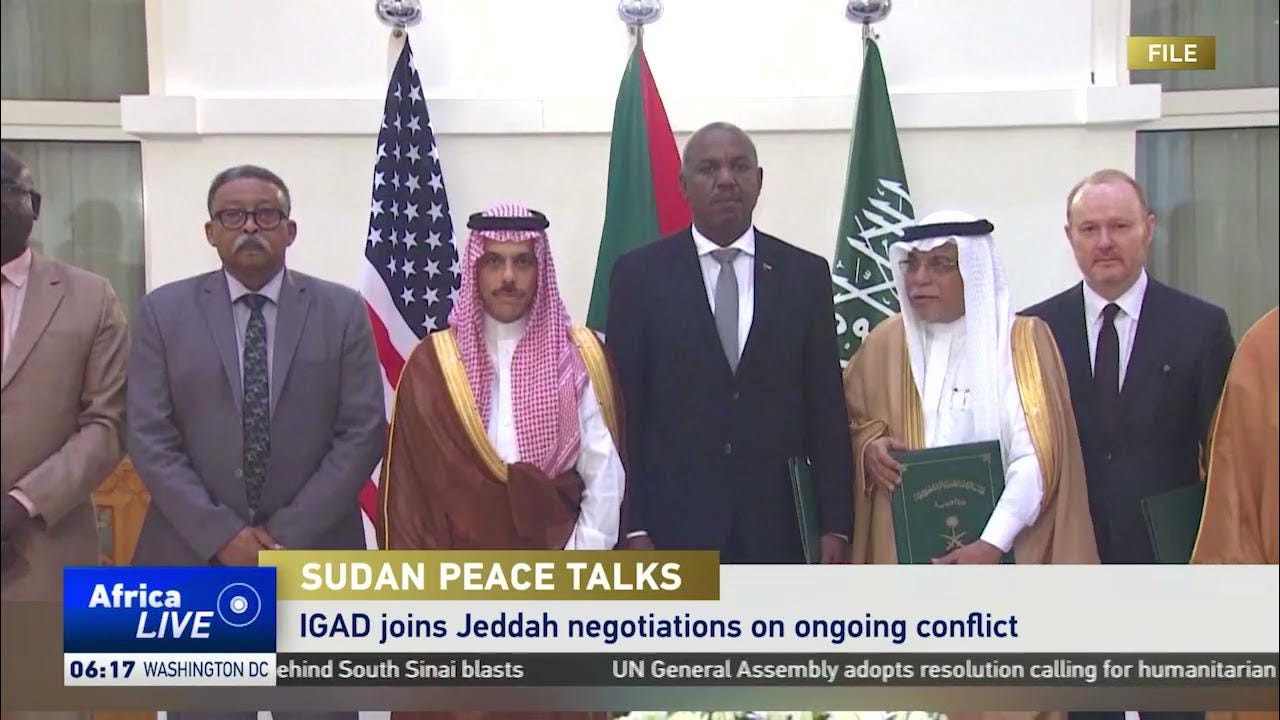
Jilted Partners. Most alarming, our diplomacy with Arab states alienated several African governments. At least one African leader pointedly asked several senior U.S. officials why Africans were being excluded from the U.S.-Saudi-led Jeddah process on Sudan. The president was frustrated, questioning whether the United States even trusted its African partners to handle the portfolio. The later inclusion of the African Union and East Africa’s Intergovernmental Authority on Development (IGAD) felt like a meager concession.
An Asymmetry
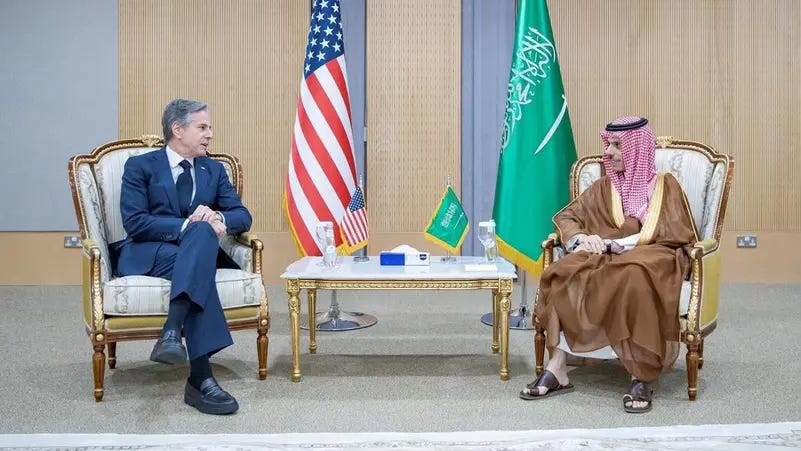
The main problem has been asymmetry. U.S. national security interests have historically ranked higher in the Near East than in Africa. Accordingly, as a U.S.-Africa policymaker, it becomes harder to put your issues on the table, press U.S. counterparts to engage, and persuade senior officials to accept your arguments when it could potentially derail Near East policy priorities.
Lower Priority. When I was in the Biden Administration, we routinely lobbied to include African issues in senior-level meetings and calls with Arab, Israeli, and Turkish leaders. To be fair, we were never turned down or told that our policy goals weren’t valid. What happened, however, was that our talking points were fourth, fifth, or sixth on the call sheet. In practice, it meant that there was rarely enough time to get to our issues and certainly insufficient space to address them in full. That made it nearly impossible to build policy momentum.
Limited Interest. This asymmetry also played out at lower levels. It required a serious amount of pestering to get my counterparts who focused on the Near East to engage on African priorities. To be fair, I often needed them to say uncomfortable things to their foreign counterparts or at least spend time on my issues at the expense of theirs. But it often felt like they saw what we were doing in their backyard as a distraction.
Less Leeway. Finally, when we had a disagreement over the direction of a policy that affected Africa and Near East interests, we were arguing from a position of weakness. That’s not to say that I didn’t win some of the debates over proposed meetings or certain initiatives, but the burden of proof most certainly fell on the Africa team. Given the considerable U.S. national security interests in the Near East, the default was to approve policies that advanced objectives there—even if it risked undercutting U.S. goals in Africa.
And if U.S.–Near East initiatives in Africa weren’t paying dividends, there was hesitation to turn them off for fear of upsetting partners in the Gulf or elsewhere. On several occasions, we decided to pause the Jeddah process for tactical and strategic reasons. But it often took convincing, since no one wanted to inadvertently insult our Saudi hosts. It was another example of the asymmetry: an effective approach in Africa was weighed against preserving important relationships with Near East partners.
But Also a Misreading of History
What was also striking about this regional balancing act was its ahistoricism. Many U.S.-Africa policymakers and commentators marveled at what they deemed to be unprecedented engagement by Turkey and Gulf states in Africa. The scale and pace of these interactions may have been new, but the interconnectedness between the two regions is centuries old. The fascination with the “newness” blinded some to the risks.
The Ottoman Empire, for example, in the late 19th century participated in the “Scramble for Africa,” eyeing the Lake Chad Basin, eastern Sahara, and Red Sea. In more recent decades, Near East leaders traveled to the continent to court partners and advance their own agendas. These engagements were documented in declassified CIA reports.
In 1958, CIA analysts assessed that Israeli Foreign Minister Golda Meir had traveled to Ghana, Liberia, and pre-independent Nigeria to “win allies who will give it support, particularly in the United Nations, and to limit the influence of UAR President Nasir.”
In 1972, CIA analysts judged that Saudi King Faisal bin Abdulaziz Al Saud’s multi-nation tour, where he stopped in Chad, Mauritania, Niger, Senegal, and Uganda, aimed to “promote African support for the Palestinian and other Arab causes.”
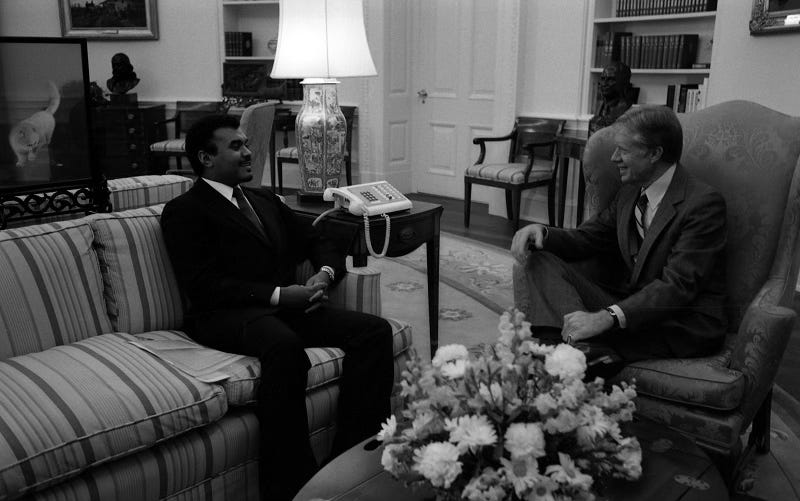
In the 1970s and 1980s, Near East countries became even more involved, presenting significant challenges for the United States. The Safari Club, an alliance of Saudis, French, Moroccans, Iranians, and Egyptians, pooled their resources to bolster their allies in Africa, including Mobutu Sese Seko of Zaire. In the New York Times, a former Carter Administration official explained: “it takes King Fahd about 10 seconds to sign a check, it takes Congress weeks to debate the smallest issue of this sort. If you can get somebody else to pay for it, it’s nice and convenient.” Saudi funding in the late 1970s helped shift Somalia’s alignment from the Soviet Union to the West. It also financed training for Jonas Savimbi’s UNITA forces in Angola and helped stave off threats to Sudanese ruler Jaafar Nimeiri. In 1973, the State Department’s Bureau of Intelligence and Research cautioned that “increasing Arab influence in Black Africa” could be used to bring pressure on the United States in areas of prime concern to both Arabs and Africans.
This misremembering of history cuts both ways. For example, many U.S. officials seemed to discount African peacemaking capacity. (This was often due to a lack of familiarity; there were several ambassadors and special envoys with more experience in Arab affairs than in African ones.) When I expressed opposition to what felt like diplomatic outsourcing to non-Africans, I was told that only the Gulf states had the resources, venues, and track record to lead these initiatives. My response was immediate: what about the Lusaka Protocol (1994), the Lomé Peace Agreement (1999), the Arta Agreement (2000), the Accra Agreement (2003), the Sun City Agreement (2003), the Arusha Accords (2005), the Comprehensive Peace Agreement (2005), the Djibouti Agreement (2008), and the Pretoria Agreement (2022)?
An Inclusive, African-led Approach
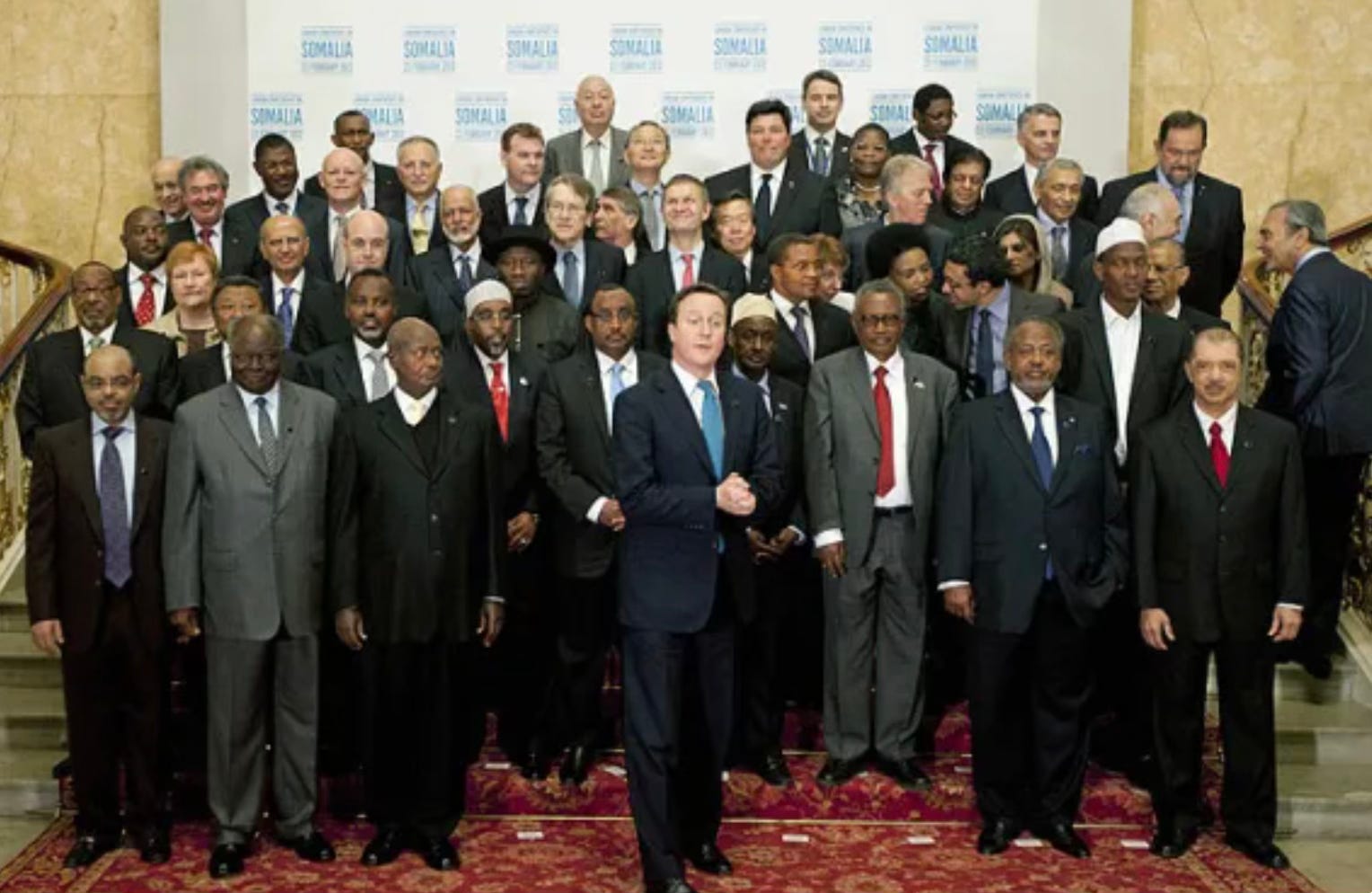
If we overlearned the lesson of the Muslim and Arab response to the Somali famine in 2011-12 by seeing virtue in everything these countries do in Africa, we also underlearned a different lesson from the same period of strife in the Horn of Africa. In February 2012, UK Prime Minister David Cameron convened the London Conference on Somalia. It was an inclusive gathering to coordinate efforts against piracy, poverty, and famine and to address the country’s civil war. Forty countries participated, including African, Arab, European, and U.S. representatives. It neither privileged nor excluded the Near East. It set the stage for future cooperation, including the “S6” group of security donors (Britain, the EU, Turkey, the UAE, the UN, and the United States). I was serving as NSC Director for Somalia at the time, and it remains a formative experience for me. It underscored what inclusivity looks like—and how tangible progress can be made when all participants are treated as equals.
A related lesson, of course, is that African leadership and ownership are crucial. When engaging Near East partners, it is imperative that Africans are part of the process. They cannot be bystanders or assigned token roles on matters of grave consequence to their own region. I continue to return to one of the principles underpinning the Bush Administration’s approach to conflict resolution in Africa: “facilitate peace by working with and within the region, including the region’s leaders (rather than imposing peace arrangements from outside).” This principle applies to U.S. cooperation with the Near East on Africa just as much as it does for Western Europe. (I will have more to say about this in a future post.)
Post Strategy
I am convinced that U.S. engagement with the Near East is important and worthwhile. After all, the Gulf states, Israel, and Turkey will continue to shape the African landscape whether the United States is involved or not. (Just look at the past two months, where the Saudi-UAE rivalry and Israel’s recognition of Somaliland have sent shockwaves through the Horn). What we must guard against, though, is reflexively subordinating our Africa priorities to our Near East objectives. There are better approaches, including initiating U.S. bilateral dialogues with Near East countries on Africa (which we did with Turkey during the Obama administration) or establishing trilaterals between the United States, an African country, and a Near East government to work through economic, security, and other priorities. We shouldn’t be shy to disagree when it is in our interest. After all, if we are going to work with the Near East, these partnerships should amplify U.S.-Africa policy—not eclipse it.
I am using the term the “Near East” consistent with the National Geographic Style Manuel. It includes the countries of the Arabian Peninsula, Cyprus, Egypt, Iraq, Iran, Israel, Jordan, Lebanon, Palestinian territories, Syria, and Turkey. The U.S. Department of State’s Bureau of Near Eastern Affairs is responsible for relations with most of these countries plus North Africa whereas the Bureau of European and Eurasian Affairs handles ties with Turkey and Cyrus, among other countries.